

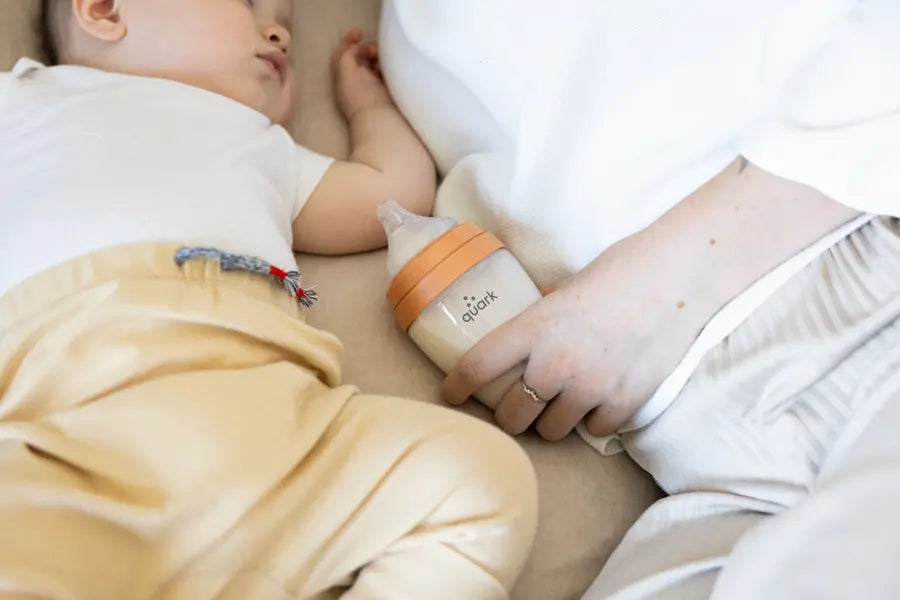
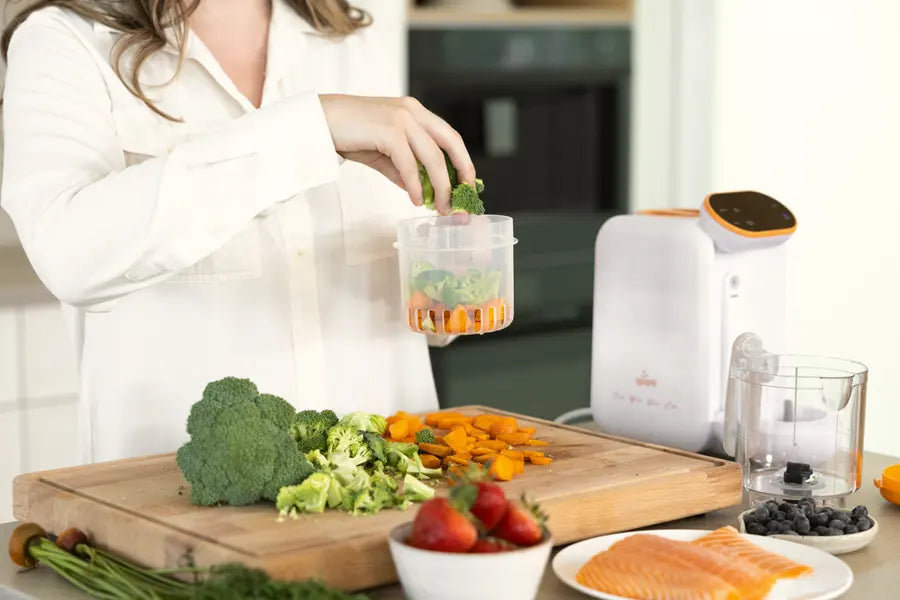
A parent on r/FormulaFeeders posted a defense of the Baby Brezza formula maker and invited people to "attack me after." Nearly 180 comments later, the top reply was a question back: "How do I know you're not working for baby brezza?" Fair question, so here is ours up front: we sell bottles and a bottle warmer, not a formula maker, and we will tell you where our own products fall short too.
For most families, a mixing pitcher plus a way to take the chill off is the better buy than a Baby Brezza. It costs a fraction of the price, has no hidden tubing to grow mold, and you measure the powder yourself. The Brezza can work well, but only if you follow the maker's cleaning schedule and check its powder dose now and then; a 2024 Consumer Reports test found two Brezza models gave less formula than expected. And if your baby is under 2 months, premature or has a weakened immune system, neither method as most people use it meets the CDC's extra step of mixing with very hot water.

Formula maker, pitcher or bottle by bottle: the comparison
Five ways parents in that thread actually make formula, side by side. The 158°F column matters for babies under 2 months, born before 37 weeks or with a weakened immune system: the CDC says to boil the water and wait about five minutes before mixing, because "Very hot water (around 158°F/70°C) is needed to kill these germs" in powdered formula, which is not sterile.
| Method | Wait when baby cries | Who measures the powder | Water near 158°F for young babies? | Cleaning it asks of you |
|---|---|---|---|---|
| Formula maker (Baby Brezza Formula Pro Advanced) | Seconds, says the maker | The machine, by formula setting | No: room, body or warmer than body temp | Funnel and reservoir after every 4 bottles, plus descaling |
| Pitcher batch, served cold from the fridge | None | You, once a day | Only if you mix with very hot water and cool it fast | One pitcher and its blade, daily |
| Pitcher batch, warmed per bottle | A few minutes in a warmer | You, once a day | Same as above | Pitcher, plus an occasional warmer rinse |
| Bottle by bottle with water held warm (our pick) | Pour, add powder, shake | You, per bottle | Yes, if the device heats to 158°F, then you cool the bottle | Bottles only, plus a rinse of the vessel |
| Warm-water dispenser (water only) | Seconds to pour | You, per bottle | Usually not: settings sit around body temp | Keep the tank filled and descaled |
Our verdict: once your baby is past the newborn weeks and healthy, the pitcher wins on cost, cleaning and peace of mind, and a baby who drinks it cold needs nothing else. For a newborn, or for a baby who refuses cold, making each bottle with water held at the right temperature is the method that covers both cases. Neither needs a formula maker.
The formula maker: fast, but you have to check its work
Baby Brezza describes the Formula Pro Advanced as making "a perfectly mixed, perfectly warm bottle in seconds", at body temperature, warmer than body temperature or room temperature. For a parent doing several night feeds, that speed is real. One parent put it plainly: "it takes 5 seconds in the baby keurig as opposed to 4-5 minutes in the bottle warmer."
The worry is accuracy. In 2024, after complaints from caregivers and medical experts to the Consumer Product Safety Commission, Consumer Reports tested the Formula Pro Advanced, its WiFi version and the Baby Exo dispenser. Its finding: "The two Baby Brezza formula makers consistently gave less formula than was expected", while the Baby Exo gave more. Coverage of a later lawsuit puts the Formula Pro Advanced shortfall at an average of about 15% less powder than intended. CR's advice was that "preparing it by hand and following the manufacturer's instructions or those from your pediatrician may be your best choice."
Why that matters: the CDC warns that "Too much water may mean the formula would not meet the nutritional needs of your baby," and too little water makes a baby's kidneys and digestive system work too hard.
Baby Brezza disputes the test. The company says its setting for the formula CR used delivers 8.7 g of powder per 2 oz of water on average, blames "significant natural variability" in formula powder from can to can, and says it tests 10 samples of each formula to choose a setting. A class action filed on September 1, 2026, in federal court in New York alleges the machines dispense too little powder even when used correctly; Baby Brezza says the suit "has no merit." Neither claim has been tested in court, and we are not taking sides on it.
What parents in the thread kept coming back to was this: "if user error is so easy to occur that there are posts going back *years*" on a machine that feeds newborns, the design is the problem.
The cleaning nobody mentions at the store
Baby Brezza's own FAQ says to clean the Formula Pro Advanced "after every 4 bottles": clear the funnel of excess powder, wipe the underside of the powder reservoir and refill with fresh water. It also asks you to keep the powder between the min and max lines. On top of that, owners describe descaling every few weeks. One parent found mold where they could not see it: "There is a u shaped section of the pipe, in the back, you can't see it, where water would sit between uses." Another, five months in, wrote that their formula "gums up the funnel so quickly."
That is the trade the second most-upvoted reply made: "I hate cleaning, so I would rather wait the 5 minutes to warm up a bottle than do the maintenance and cleaning on the baby brezza." If the time you save at the button goes back into the funnel, the machine has not saved you much.
The 158°F gap
The Formula Pro Advanced's listed temperatures stop at "warmer than body temp." That suits most babies, but not the ones the CDC singles out (under 2 months, premature, weakened immune system), for whom the water should be near 158°F when it meets the powder. If your baby is in that group, a formula maker does not replace that step. Ask your pediatrician before you rely on one.
The pitcher method: cheap, boring and hard to get wrong
The pitcher method means mixing a day's formula in one jug, refrigerating it, and pouring bottles as you need them. A popular choice is the Dr. Brown's Formula Mixing Pitcher, which the maker says mixes up to 32 ounces, enough for four 8 oz bottles, with a blade that blends out clumps and a locking lid. Several parents in the thread switched to it after giving up on the Brezza: "We sold it on Facebook and ended up doing the pitcher method, which was way more convenient." One family skipped the machine entirely: "We have 4 so there's always a clean one to use!"
Do it within the limits the health bodies set:
- Measure water first, then powder, using the amounts on your formula container (CDC). Some parents add a kitchen scale; one described "10 minutes to clean and make a 32oz pitcher" with one.
- Refrigerate the batch and use it within 24 hours. The AAP says prepared formula that has not been fed "may be stored in the refrigerator for 24 hours." WHO's home guidance says the same, with the fridge no warmer than 5°C (41°F) and the batch in a clean container of no more than 1 litre with a lid. A 32 oz pitcher is about 946 ml, inside that limit.
- Once a bottle is poured and the feed starts, the clock is short. The CDC says to use prepared formula within one hour from when feeding begins and to throw out what is left in the bottle.
- If you warm a bottle from the pitcher, WHO says to re-warm for no more than 15 minutes and discard it if it is not finished within two hours. Never use a microwave.
Who the pitcher does not suit: a baby in the CDC's extra-care group, unless the batch is mixed with very hot water and cooled quickly, and WHO cautions that large volumes cool too slowly. For those babies, small batches or bottle-by-bottle prep are the safer route; your pediatrician can tell you which.
The other honest limit: a pitcher bottle comes out of the fridge cold. Many babies do not mind. "Does no one just give their baby a cold bottle from the fridge?" one parent asked, and the CDC agrees that "Infant formula does not need to be warmed before feeding." But some babies care: "We tried to give our baby cold from the fridge from the get go and he was adamantly against it." Try cold in the daytime first, when a refusal is not a crisis. Our milk temperature guide covers what is safe.

The bottle warmer route: bottle by bottle, with water already warm
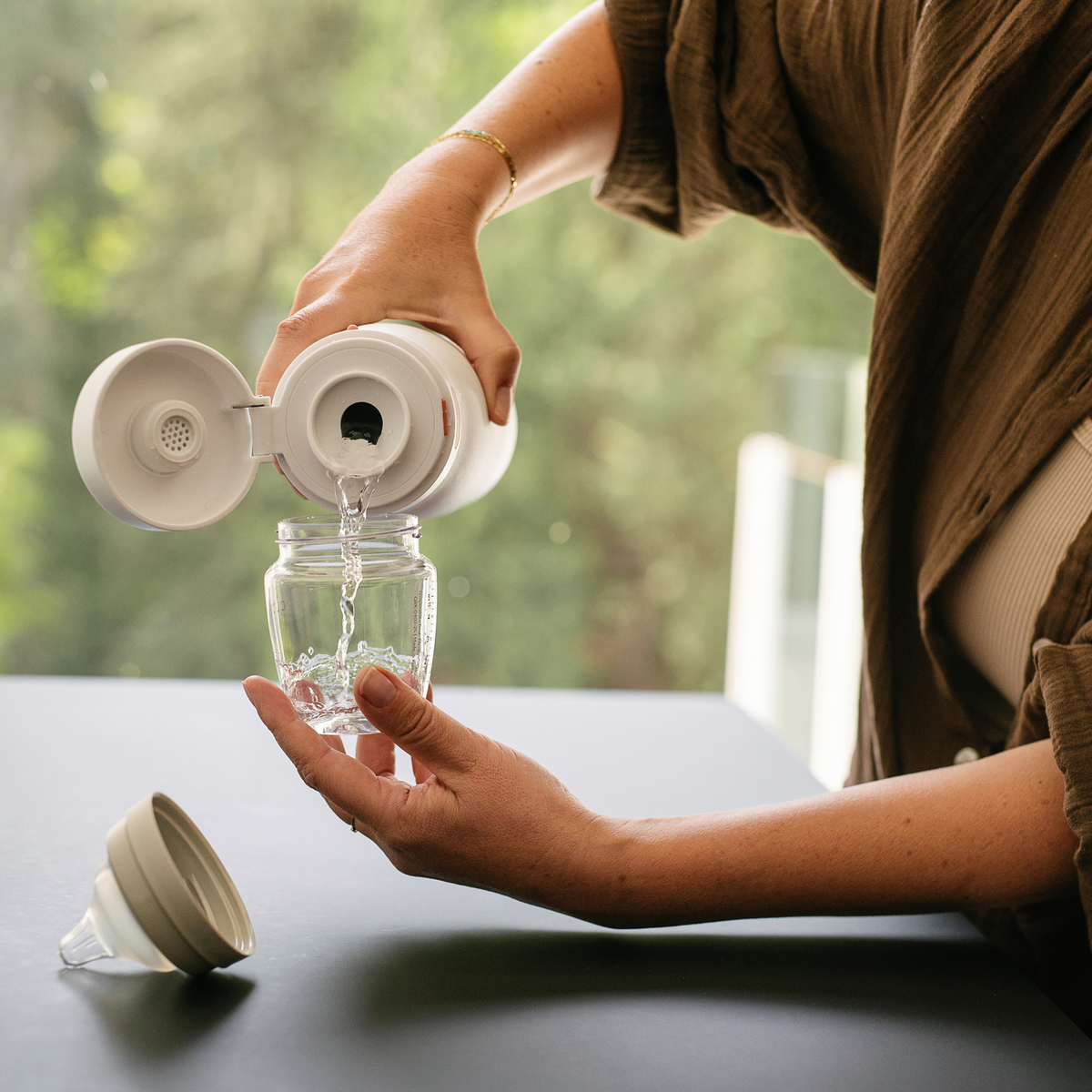
This is how bottles were made before any machine: water in the bottle, powder on top, lid on, shake. It takes about as long as a diaper change if the water is ready. The catch has always been the water. Cold tap water makes a cold bottle; boiled water has to cool. A device that holds water at a set temperature solves both. One parent chose the simple version: "We considered the bottle maker but settled on the baby brezza instant water warmer instead." A dispenser like that holds water around body temperature, which is fine for older babies but not the 158°F the CDC wants for young ones.
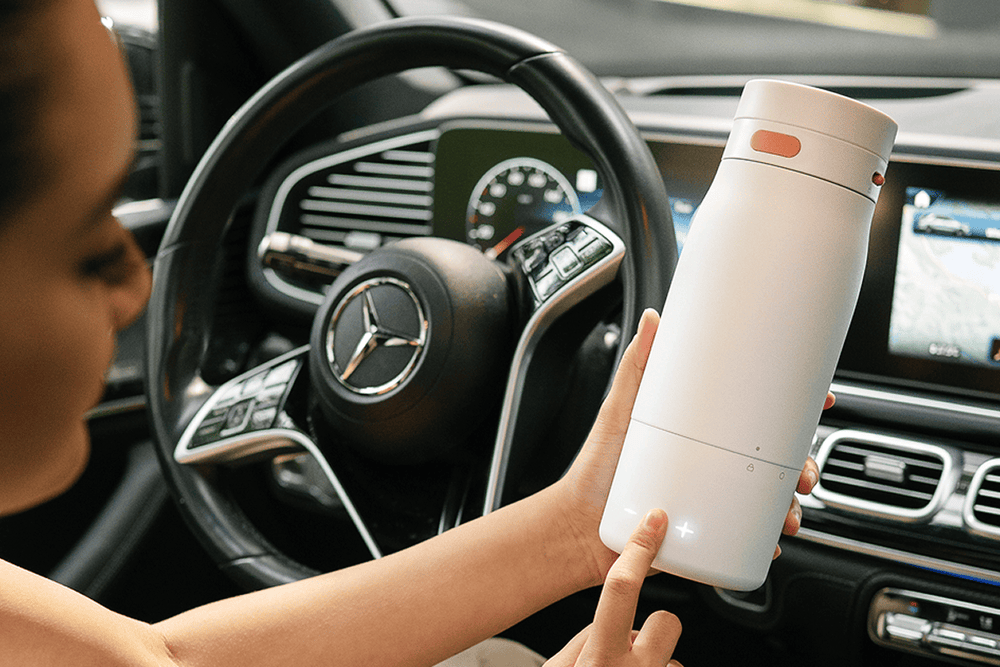
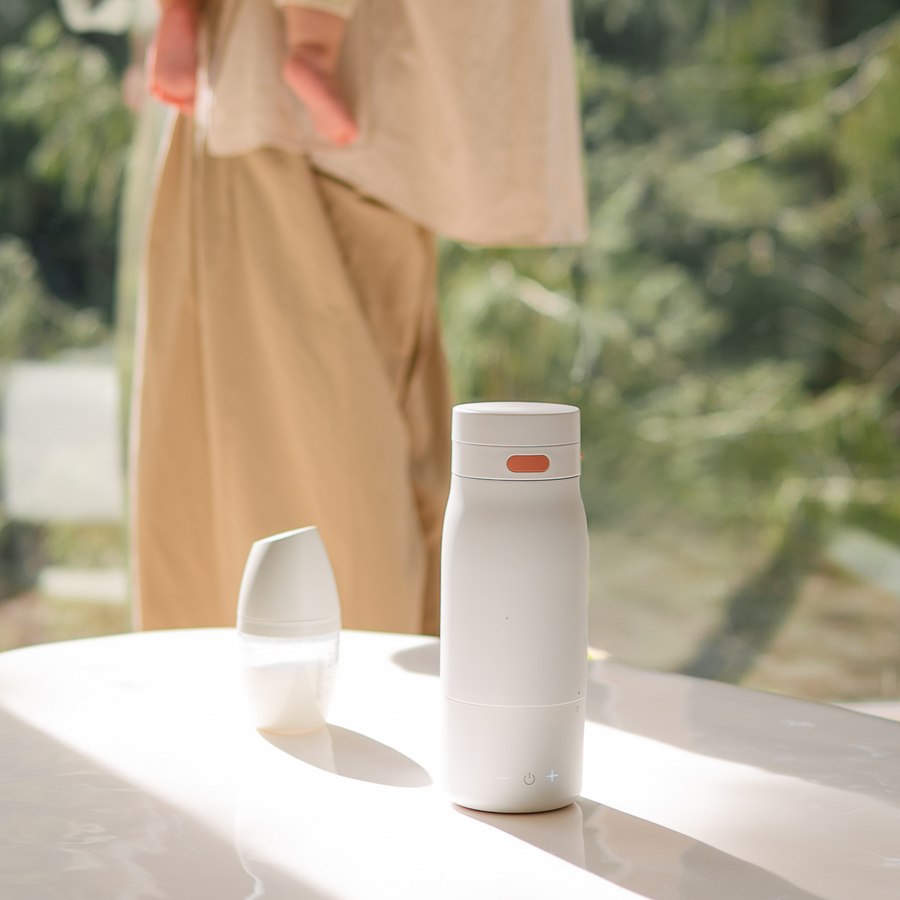
That gap is where our BuubiBottle Portable Milk Warmer PRO fits. It has a Formula Preparation Mode that heats water to 158°F (70°C), and otherwise holds water or milk at whatever temperature you set, to a single degree. For a newborn, you pour the hot water, add the powder, shake, and cool the bottle until a few drops feel warm, not hot, on your wrist. For an older baby, set it to a warm temperature before bed and mix on the spot. For a pitcher family, it warms a fridge bottle by immersion: the wide opening fits most bottles.

BuubiBottle Portable Milk Warmer PRO
Holds water or milk at the temperature you set, to the degree; Formula Preparation Mode heats water to 158°F (70°C).
Shop BuubiBottle PROWhere it falls short, honestly: it costs more than a pitcher or a basic water dispenser. It is one more thing to charge, though a charge lasts all day. Its single 17 oz vessel holds water for a few bottles, not a whole day of feeds. And when you use the 158°F mode, you still have to cool the bottle before feeding, which takes time a formula maker does not ask for. If your baby is past the newborn weeks and drinks cold formula, a pitcher alone is enough. Cleaning is simple: the steel vessel twists off the base, so the electronics never get wet; our warmer cleaning guide covers descaling.
"But my Brezza works fine"
Plenty of owners said so, and we believe them. "I have tested the accuracy a few times and it's spot on." Another owner tested theirs and found the output consistent, but wrote that "the setting that BB recommended for our formula (Neuropro) was wrong so I adjusted it myself."
That second story is the practical lesson. If you already own a Brezza and like it, keep using it, but treat it like a tool you check, not a tool you trust:
- Clean the funnel and reservoir on the maker's schedule, and take apart what can be taken apart to look for mold.
- Every so often, dispense a bottle and compare it against one you scoop by hand from the formula container's instructions, by weight if you have a kitchen scale.
- Re-check the setting when you change formula brands or cans.
- For a baby under 2 months, premature or with a weakened immune system, ask your pediatrician whether to use it at all.
- Watch the baby, not the machine: slow weight gain or a baby who seems hungry soon after full bottles is a reason to call the pediatrician.
Bottles that make any method easier
Whichever method you choose, the bottle is the part you handle most. A wide neck makes it easier to pour from a pitcher without spills and to scoop powder in by hand, and a bottle with few parts is quicker to wash. Our wide-neck bottle guide explains why.

BuubiBottle Max 8 oz Anti-Colic Baby Bottle
8 oz with a wide neck for pouring from a pitcher or scooping powder, and a vented anti-colic nipple.
Shop BuubiBottle MaxFor the first weeks, when feeds are small and frequent, the 5 oz BuubiBottle Mini is the starter size; its nipples and parts carry over to the Max later. Not sure which size? See Mini vs Max. Their limits: the Mini is small for a pitcher family pouring larger feeds, and the Max is sized for babies around 4 months and older, so a newborn starts on the Mini.

BuubiBottle Mini
5 oz starter bottle with the RealFeel nipple for a slow, paced flow in the newborn weeks.
Shop BuubiBottle MiniCommon questions
Is the Baby Brezza safe to use?
It depends on how carefully you use it. In Consumer Reports testing (March 2024), two Brezza models gave less powder than expected, and Baby Brezza disputes that. If you use one, follow its cleaning schedule, check its output against a hand-made bottle now and then, and re-check the setting when you change formula.
Is the pitcher method safe for a newborn?
It depends on the baby. For a healthy baby past 2 months, a refrigerated batch used within 24 hours follows AAP and WHO guidance. For babies under 2 months, premature or with a weakened immune system, the CDC wants water near 158°F mixed with the powder, and large batches cool slowly; ask your pediatrician whether to make bottles one at a time.
Does formula from a pitcher need to be warmed?
No. The CDC says infant formula does not need to be warmed before feeding. Some babies refuse cold bottles, though. If yours does, warm each bottle for no more than 15 minutes, never in a microwave, and use it within two hours. Our guide to reheating bottles has the timings.
How long does a pitcher of formula last in the fridge?
Up to 24 hours. That is the AAP and WHO limit for prepared formula that has not been fed, in a fridge at 5°C (41°F) or colder. Once your baby starts drinking from a bottle, use it within one hour and throw out the rest.
Is a bottle warmer easier than a formula maker?
For cleaning, usually yes: a warmer touches water or a sealed bottle, not powder. For speed at 3 a.m., a formula maker wins if it is clean and accurate. Our night-feed warmer comparison compares six setups, and do you need a bottle warmer? covers whether you need one at all.
What about cleaning the bottles themselves?
Every method still leaves you with bottles to wash. Some parents in the thread said they would rather put the formula-maker money toward a bottle washer; our bottle washer comparison looks at whether that is worth it. Heading out for the day? See formula on the go.
Our picks
For a newborn or a baby who wants warm bottles: the PRO for 158°F water at the bedside, with a Mini. For an older baby on the pitcher method: a Max, and the PRO only if your baby refuses cold.
BuubiBottle Portable Milk Warmer PRO
Our pick: 158°F water for newborn bottles, or warms a fridge bottle at the bedside.
Shop PRO
BuubiBottle Max 8 oz Anti-Colic Baby Bottle
Wide-neck 8 oz bottle that is easy to fill from a pitcher and easy to brush clean.
Shop MaxSources
- Centers for Disease Control and Prevention: Infant Formula Preparation and Storage (page dated May 14, 2026).
- American Academy of Pediatrics, HealthyChildren.org: How to Safely Prepare Baby Formula With Water (last updated February 25, 2026).
- American Academy of Pediatrics, HealthyChildren.org: How Do I Mix and Serve Infant Formula for My Baby? (last updated March 23, 2018).
- World Health Organization and FAO: Safe preparation, storage and handling of powdered infant formula: guidelines (2007), Part 3, In the home.
- Consumer Reports, syndicated by NBC DFW: Baby formula makers, are they worth it? Consumer Reports investigates (March 12, 2024); KSAT: 3 baby-formula makers didn't work well in Consumer Reports tests (March 5, 2024).
- FOX 29: Baby Brezza hit with class action lawsuit over alleged formula dispenser defect (October 27, 2026); ClassAction.org: Baby Brezza lawsuit says formula maker produces diluted baby bottles.
- Baby Brezza: Formula Pro Advanced product page and FAQ and We strenuously disagree with Consumer Reports' assessment, checked November 18, 2026.
- Dr. Brown's: Formula Mixing Pitcher, checked November 18, 2026.
- Parent discussion, r/FormulaFeeders: Hot take on baby brezza bottle maker. Feel free to attack me after.
Medical disclaimer: This article is for general informational purposes and is not a substitute for medical advice. Guidance reflects CDC, AAP and WHO publications as dated above. If your baby was born prematurely, is under 2 months old, has a weakened immune system or a medical condition, or is not gaining weight as expected, ask your pediatrician how to prepare formula. We compared manufacturers' published information and independent test reports and did not bench-test these devices. Portions of this content draw on AI assistance and are reviewed by a qualified medical reviewer before publication.
Medically reviewed by Dr. Yang. Last reviewed November 18, 2026.


Leave a comment
All comments are moderated before being published.
This site is protected by hCaptcha and the hCaptcha Privacy Policy and Terms of Service apply.