

It is 6 p.m. You have just collected the baby from daycare with five dirty bottles in the bag, dinner is not started, and bedtime is in an hour. That is the exact moment one parent on r/FormulaFeeders described when someone asked what a bottle washer is actually for: "I don't want more things I need to hand wash."
A countertop bottle washer is worth the counter space if you clean six or more bottles a day and your dishwasher can't keep up. For most other families, a dedicated wash basin and brush, or a dishwasher you already run daily, cleans bottles just as safely for nothing extra. The CDC says a dishwasher run with hot water and a heated drying cycle needs no separate sanitizing step. A washer's real advantages are speed, drying and having one machine just for baby things. Its weak spots are cost, footprint and the small parts it still misses.
Below: the three methods side by side, the four machines parents mention most, what none of them fix, and which babies need sanitizing at all.
Bottle washer vs hand-washing vs dishwasher
| Countertop bottle washer | Hand-washing (basin + brush) | Dishwasher you already own (our pick for most homes) | |
|---|---|---|---|
| Upfront cost | A few hundred dollars | Basin, bottle brush, nipple brush | A closed-top basket for small parts |
| Counter space | About a stand mixer's footprint | A drying spot only | None |
| Cycle | Roughly 80 to 135 min with steam and drying | A few minutes per bottle, then air-dry | Can run for hours |
| Sanitizes? | Yes, a steam stage | No; boil or steam separately if needed | Yes, with hot water and heated dry (CDC) |
| Dries? | Yes, fan-dried, often HEPA-filtered | Air-dry, hours | Often still wet |
| Ongoing | Tablets, descaling, filters | Dish soap, new brushes | What you already buy |
| What it leaves to you | Pre-rinse, tiny vent parts, descaling | All of it, every feed | Waiting for a full load |
| Best for | 6+ bottles a day, pump parts, no daily dishwasher | 1 to 4 bottles a day, small kitchens | Homes that run it every night |
Our pick for most homes is the dishwasher you already have, run every night on a hot cycle with heated drying, plus a basin and brush for the odd bottle you need before then. It costs nothing new, takes no counter space, and the CDC says a hot cycle with heated drying needs no separate sanitizing step. Its catch is the one parents raise over and over: one wrote that their dishwasher "is on at least a 3hr wash cycle" and only runs once or twice a week. If that is your kitchen, the math changes, and a washer starts to make sense.
Hand-washing is the cheapest and smallest option and is completely adequate for a healthy baby. It is also the most work, and that work lands at the worst hours. One reply in the thread put the real cost well: "Washing bottles isn't the hard part for me. It's the tiny bits and pieces that stress me out."
What a bottle washer actually does
A countertop bottle washer is a small dishwasher built for baby gear. You load bottles upside down over spray pegs and small parts in a top basket, add a detergent tablet, and it washes, rinses, steams at 212°F, then dries everything with hot air passed through a filter. Most models will also hold items in a closed, dry chamber afterwards. You fill the clean-water tank by hand; some drain through a hose into the sink, others into a second tank you empty.
These are the four machines that come up most in parent threads, with specs from each maker's own product page (checked November 16, 2026):
| Machine | Bottles per load (maker) | Full cycle | Water in / out | Size (W × D × H) |
|---|---|---|---|---|
| Momcozy KleanPal Pro | Up to 4 | 19 min rapid wash + about 60 min steam and dry | Tank in, drain hose out | 250 × 342 × 409 mm |
| Momcozy DeepClean D8 | Up to 8 | Wash + 9 min steam + 55 min dry | Tank in, drain hose out | 270 × 350 × 390 mm |
| Baby Brezza Bottle Washer Pro | Up to 4 | 90 min wash, sterilize and dry | Clean and dirty tanks, no hose | "Similar size to stand mixer" |
| eufy Bottle Washer S1 Pro | Up to 10 | 94 min auto mode | Side tank in, drain hose out | 345 × 373 × 432 mm |
Two things stand out. First, the official capacities are lower than what parents actually load. The Momcozy thread started with a parent who had given up on the recommended four bottles per load and packed in more, and the top reply said "I can fit eight." Another answered: "I spent the last year doing 4 at a time, and you're telling me everyone else has been loading them up?" Others pointed out that tightly packed bottles can block the upper spray, so overloading is a gamble on how clean the top rack gets. Second, the drain matters for where it can live. A hose model has to sit next to the sink; the Baby Brezza's two tanks let it sit anywhere, at the cost of carrying dirty water.
The honest case for a washer comes from the parents who love theirs. They run it two or three times a day while the family dishwasher runs every other day. One said theirs "dries everything out" when the dishwasher never does. Pump parts, pacifiers and teethers all go in the same load. If you are exclusively pumping, feeding twins or sending bottles to daycare, that adds up to real time back each evening.
What a washer doesn't fix
The same thread is a good list of what still lands on you.
- Dried milk and fat. Several parents found bottles coming out with an oily film. One started using two tablets: "sometimes with one tablet, the bottles came out oily or had residue." Others fixed it by rinsing bottles straight after the feed, which is also the CDC's first step for any method.
- Tiny vent parts. Anti-colic straws and valves with pinholes are the hardest items to clean, and jets don't always reach inside them. One parent warned: "I promise those itty bitty holes are not getting clean with the bottle washer." Most owners keep a small brush anyway.
- Moisture and mold. A washer is a warm, wet machine. One parent opened a thread by saying they were "mainly concerned about mold growth since it's a water device." Follow the maker's own cleaning steps for the filter, tank and seals.
- Descaling. Hard water leaves spots and slows heating. Momcozy's own FAQ recommends descaling every 20 cycles, and parents report doing it every three to four weeks.
- Tablets. The Baby Brezza page says the machine "only works with" Baby Brezza detergent tablets. Check what your model needs before you count the running cost.
- The counter. The sceptic in the thread summed it up: "counter space is too valuable around here to give up for a gadget." A washer is also a single-purpose appliance you will put away or sell once bottles end. One reply suggested a small countertop dishwasher instead, which keeps being useful after the baby years.
Makers also make claims we could not check. Baby Brezza says its washer "saves you 30 minutes a day" and cleans better than bottle brushes. Momcozy's D8 page promises you will "Reclaim at Least 60 Minutes Every Day." These are the companies' own figures, and we found no independent test of them.
Hand-washing done properly
If you hand-wash, do it the way the CDC describes, because the details are where germs survive:
- Take everything apart: bottle, nipple, ring, cap and any valve.
- Rinse under running water straight after the feed. The CDC says not to set parts in the sink, which "may contain germs that could contaminate these items."
- Wash in a basin used only for feeding items, with hot water and soap, and a brush used only for bottles. "Squeeze water through nipple holes to be sure they get clean."
- Rinse again under running water or in a second clean basin.
- Air-dry on a clean, unused dish towel or paper towel. "Do not use a dish towel to rub or pat items dry because doing so may transfer germs to the items."
- Clean the basin and brush every few days, or after every use if your baby is under 2 months, premature or has a weakened immune system.
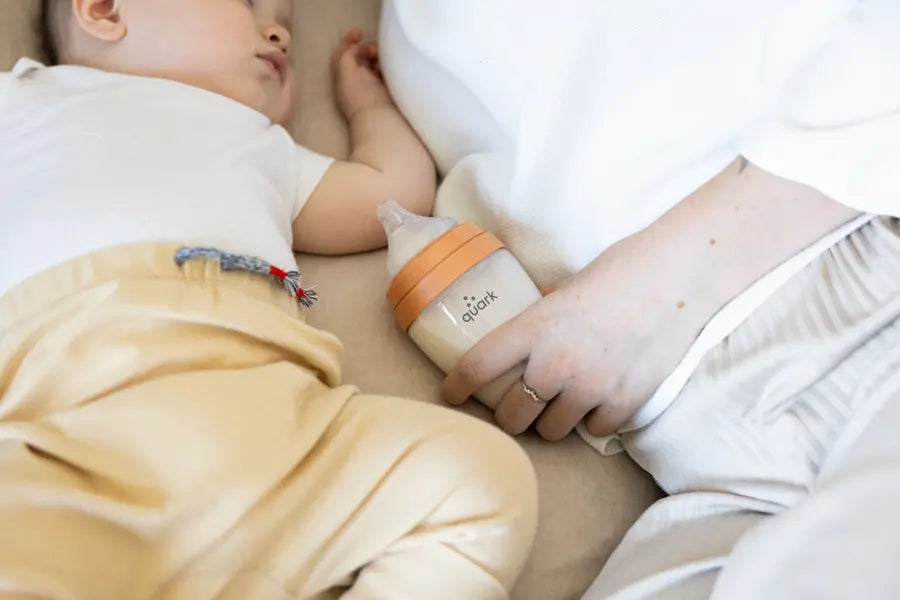
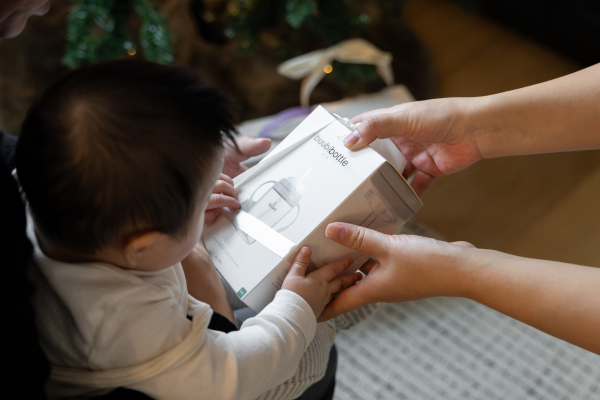
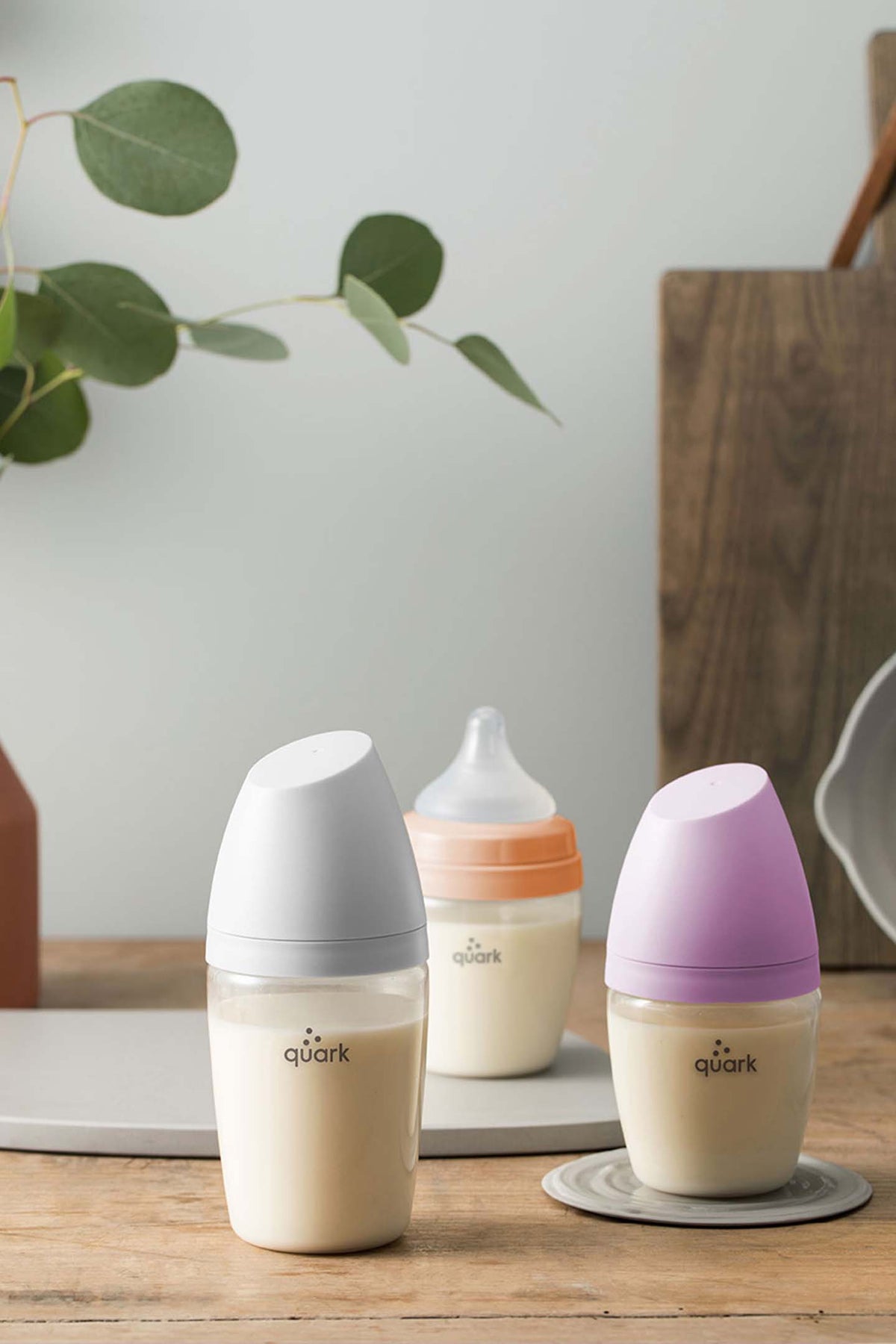
The fewer parts a bottle has, and the wider its neck, the faster every one of those steps goes, by hand or by machine. That is the part of this decision we do make. In the photo below, the BuubiBottle Mini comes apart into three pieces: the RealFeel nipple, the collar and a wide-neck body your brush reaches the bottom of. The anti-colic valve is built into the nipple, so there is no vent straw to lose in a washer basket or clean with a pin brush. Our BuubiBottles are dishwasher-safe, and we explain why the opening matters in wide-neck bottles: why cleaning feels easier.


BuubiBottle Mini 5 oz
A 5 oz starter bottle with a wide neck and a dishwasher-safe body, quick to clean by hand or machine.
Shop BuubiBottle MiniWho needs to sanitize, and how often
Steam sterilizing is the feature washer makers lead with, so it is worth knowing who actually needs it. The CDC's answer: sanitize feeding items at least daily if your baby is less than 2 months old, was born prematurely, or has a weakened immune system from illness or treatment. For older, healthy babies, daily sanitizing "may not be necessary" if items are cleaned carefully after each use. The AAP says the same of hot, soapy water: "This alone should kill most germs."
If you do need to sanitize, you have options before buying a machine. The CDC lists boiling for 5 minutes, a microwave or plug-in steam sterilizer used per its instructions, or a hot dishwasher cycle with heated drying, after which "a separate sanitizing step is not necessary." A bottle washer's steam stage is one more way to do the same job.
UK readers will see stricter advice. The NHS says to sterilise all feeding equipment until a baby is at least 12 months old and that a dishwasher "will clean it but it does not sterilise it." Our guidance follows the CDC and AAP, since we sell in the US and Canada. If your baby was premature or is medically fragile, ask your pediatrician which routine to follow. For the longer version, see why you (probably) don't need to sterilize your baby bottles and our newborn germ protection guide.
Our take: who should buy one

A washer is likely worth it if you wash six or more bottles a day, you pump and have pump parts on top, you have twins, or your dishwasher runs less than daily and takes hours. It is also a fair choice if your baby is in the group that needs daily sanitizing and you have no dishwasher with heated drying.
Skip it if you feed a healthy baby one to four bottles a day, you already run the dishwasher every night, or your counter is already crowded. Put the money toward enough bottles to get through a day, a good brush and a drying spot. Our guide to a small-kitchen feeding station covers where everything can go.
Whichever you choose, the bottles matter more than the machine. A wide neck and fewer parts make every cleaning method faster. Having enough bottles for a day means you wash once at night instead of after every feed. The BuubiBottle Starter Set gives you a Mini (5 oz) for early feeds and a Max (8 oz) for later, with eight vented RealFeel nipples in Slow, Medium, Fast and Flex flows, and the set is dishwasher-safe. If you are still deciding sizes, our Mini vs Max size guide helps.

BuubiBottle Starter Set
A Mini (5 oz), a Max (8 oz) and 8 RealFeel nipples in four flows, all wide-neck and dishwasher-safe.
Shop the Starter SetCommon questions
Is a bottle washer better than a dishwasher?
No, not for cleanliness. The CDC says a dishwasher run with hot water and a heated drying cycle needs no separate sanitizing step. A bottle washer is faster per load, dries more reliably and runs on its own schedule, which is why busy families like them.
Do you need to wash bottles before sterilizing them?
Yes. Sanitizing kills germs but does not remove dried milk. The CDC's steps are clean first, then sanitize, and the NHS also says to clean equipment in hot, soapy water before sterilising. A bottle washer does both in one cycle, but a quick rinse straight after the feed still helps it.
Can I hand-wash bottles in the kitchen sink?
No, not directly in it. The CDC says to rinse under running water and wash in a separate basin used only for feeding items, because the sink itself may hold germs.
Do I still need a bottle brush if I buy a washer?
Yes, most owners keep one. Jets don't always clear the pinholes in vent parts or dried residue in nipples, and parents in the threads report brushing those by hand.
Can I use any detergent in a bottle washer?
It depends on the model. Baby Brezza says its Bottle Washer Pro only works with its own tablets. Some parents in the threads use other detergent powders in their machines; check your model's manual before you switch.
What makes a baby bottle easier to clean?
Fewer parts and a wider neck. Every extra straw, valve or insert is one more thing to brush and dry, and a narrow neck keeps the brush off the bottom. BuubiBottles open wide and the anti-colic valve sits in the nipple, so a bottle is three pieces to wash.
How often should I sanitize bottles?
It depends on your baby. The CDC says at least daily for babies under 2 months, born prematurely or with a weakened immune system. For older, healthy babies, careful cleaning after each feed is usually enough.
Sources
- Centers for Disease Control and Prevention: How to Clean, Sanitize, and Store Infant Feeding Items (March 19, 2025).
- American Academy of Pediatrics, HealthyChildren.org: How to Sterilize and Warm Baby Bottles Safely (last updated August 7, 2018).
- NHS: Sterilising baby bottles (last reviewed February 24, 2023).
- Manufacturer product pages, checked November 16, 2026: Momcozy KleanPal Pro, Momcozy DeepClean D8, Baby Brezza Bottle Washer Pro, eufy Bottle Washer S1 Pro.
- Parent discussions: r/FormulaFeeders Momcozy Bottle Washer and Bottle washer; r/NewParents Peri bottle in Bottle Washer?
Medical disclaimer: This article is for general informational purposes and is not a substitute for medical advice. Guidance reflects CDC, AAP and NHS publications as dated above. If your baby was born prematurely, is under 2 months old, or has a weakened immune system or a medical condition, ask your pediatrician how often to sanitize feeding items. Portions of this content draw on AI assistance and are reviewed by a qualified medical reviewer before publication.
Medically reviewed by Dr. Yang. Last reviewed November 16, 2026.


Leave a comment
All comments are moderated before being published.
This site is protected by hCaptcha and the hCaptcha Privacy Policy and Terms of Service apply.