

Este artículo tiene fines informativos generales y no constituye un consejo médico. Si tu bebé nació antes de tiempo, está en un programa de alimentación hospitalario o tiene alguna condición médica, sigue el plan de alimentación de tu propio equipo médico.
Son las 3 de la madrugada. Tienes el biberón en la mano, tu bebé está a punto de romper a llorar de verdad y te preguntas si tienes que quedarte ahí calentándolo o si puedes darle de comer ya. Esta es la respuesta corta, directamente de los CDC: la leche materna no necesita calentarse, y la fórmula tampoco. Si decides calentarla, apunta a la temperatura corporal, unos 37°C (98.6°F), y prueba unas gotas en la parte interna de tu muñeca. Debe sentirse tibia, no caliente.
El resto de esta guía explica si la leche tibia es realmente mejor que la fría, por qué ninguna autoridad sanitaria publica una cifra «máxima», cómo saber si un biberón está demasiado caliente y cuánto tiempo se conserva la leche ya calentada. Al final respondemos las preguntas que los padres más buscan.

¿Los bebés necesitan leche tibia?
No. Los CDC lo dicen claramente: «La leche materna no necesita calentarse. Puede servirse a temperatura ambiente o fría». Su guía sobre la fórmula dice lo mismo: «No necesitas calentar la fórmula infantil antes de alimentar a tu bebé, pero a algunas personas les gusta calentar el biberón». El NHS añade que puedes darle la leche extraída directamente del refrigerador si a tu bebé no le molesta tomarla fría.
Así que calentarla es una elección, y una perfectamente razonable. Algunos bebés aceptan mejor un biberón tibio; muchos otros lo toman frío sin pensarlo dos veces. La reacción de tu bebé es la mejor guía que tienes.
Hay una razón práctica para decidirlo pronto: lo que hagas con más frecuencia se convierte en lo que tu bebé espera. Un bebé que solo ha tomado biberones tibios puede rechazar uno frío justo el día en que no tienes cómo calentarlo. Si tu bebé toma la leche fresca, puedes saltarte el calentado por completo y nunca tendrás que resolver ese problema fuera de casa. Para saber más sobre el biberón en sí, consulta nuestra guía sobre dar el biberón a un bebé amamantado.
¿Es mejor la leche tibia que la fría para los bebés?
En un bebé sano nacido a término, la evidencia no demuestra que una sea mejor que la otra. La temperatura tiene que ver con lo que tu bebé acepta, no con la nutrición ni la digestión.
El resumen más útil es una revisión sistemática y metaanálisis de 2026 publicada en Breastfeeding Medicine (Gök y Turan, 2026). Reunió cinco estudios con 373 recién nacidos y no encontró ningún efecto estadísticamente significativo de la temperatura de la leche sobre la frecuencia cardíaca, la saturación de oxígeno, la temperatura corporal ni el tiempo hasta la alimentación completa. Su conclusión: la leche a temperatura ambiente, la leche cercana a la temperatura corporal y otros métodos de calentamiento «parecen tolerarse igual de bien».
Hay dos detalles importantes al leer esa investigación. Primero, casi todos los ensayos que encontramos se hicieron con bebés prematuros en unidades neonatales, no con bebés sanos nacidos a término en casa. Segundo, esos ensayos apuntan en direcciones distintas. Un ensayo de 2019 con 80 bebés prematuros (Uygur et al.) encontró menos episodios de apnea y menos tratamiento antirreflujo cuando las tomas se calentaban a 32 a 34°C en lugar de darse a temperatura ambiente. Un ensayo de 2025 con 26 bebés prematuros con dificultades para alimentarse (Ferrara-Gonzalez et al.) encontró que la leche fría era segura y mejoraba un indicador de la calidad de la alimentación. Si tu bebé nació antes de tiempo, la temperatura de la leche es una pregunta para tu equipo de la UCIN o de pediatría, no para una guía general como esta.

Una toma tranquila importa más que la temperatura exacta del biberón.
Tibia o fría, la leche es la misma leche. La única temperatura que de verdad supone un riesgo es la caliente.
¿Es diferente en los recién nacidos?
En un bebé sano nacido a término, las reglas son las mismas desde el primer día. Las pautas de los CDC y del NHS mencionadas arriba no tienen límite de edad: un recién nacido puede tomar la leche fría, a temperatura ambiente o calentada a temperatura corporal, y la única regla firme es que nunca esté caliente. Hay dos cosas que cambian en las primeras semanas.
- La fórmula para bebés menores de 2 meses a menudo empieza caliente. La AAP recomienda agua hervida para preparar la fórmula en polvo de los bebés menores de 2 meses, así que el biberón de fórmula de un recién nacido normalmente necesita enfriarse más que calentarse. Enfríalo a temperatura corporal y pruébalo en tu muñeca antes de darlo.
- Los bebés que nacen antes de tiempo tienen su propio plan. La mayor parte de la investigación sobre la temperatura de la leche se hizo con bebés prematuros, y sus resultados no coinciden. Si tu bebé fue prematuro o estuvo en una unidad neonatal, pregunta a ese equipo a qué temperatura quieren que le des las tomas en casa.
¿A qué temperatura debe estar la leche del bebé?
Si la calientas, apunta a la temperatura corporal: unos 37°C, o 98.6°F. El NHS describe el objetivo como «temperatura corporal, es decir, debe sentirse tibia o fresca, pero no caliente». La guía de los CDC sobre la fórmula lo resume en pocas palabras: «tibia, no caliente».
En internet verás límites máximos concretos, como 40°C o 104°F. Revisamos los CDC, la AAP y el NHS, y ninguno publica una cifra máxima. Te dan un objetivo (la temperatura corporal) y una prueba (tu muñeca). Creemos que así es como debe ser: la lectura de una pantalla te indica la temperatura donde está el sensor, pero tu muñeca te dice lo que está a punto de sentir la boca de tu bebé.
Si solo te quedas con una cosa: la temperatura correcta de un biberón tibio es la misma que la temperatura corporal de tu bebé.
| Punto de referencia | °F | °C | Qué significa para un biberón | Fuente |
|---|---|---|---|---|
| Refrigerador (al fondo, no en la puerta) | 39°F o menos | 4°C | Se puede dar frío sin problema | AAP |
| Temperatura ambiente | Hasta 77°F | Hasta 25°C | Se puede dar tal cual sin problema | AAP, CDC |
| Temperatura corporal (el objetivo si la calientas) | 98.6°F | 37°C | Se siente tibia o neutra en tu muñeca | NHS, CDC |
| Agua para preparar fórmula en polvo | 158°F o más | 70°C o más | Demasiado caliente para darla: prepara la fórmula y luego enfríala a temperatura corporal | NHS |
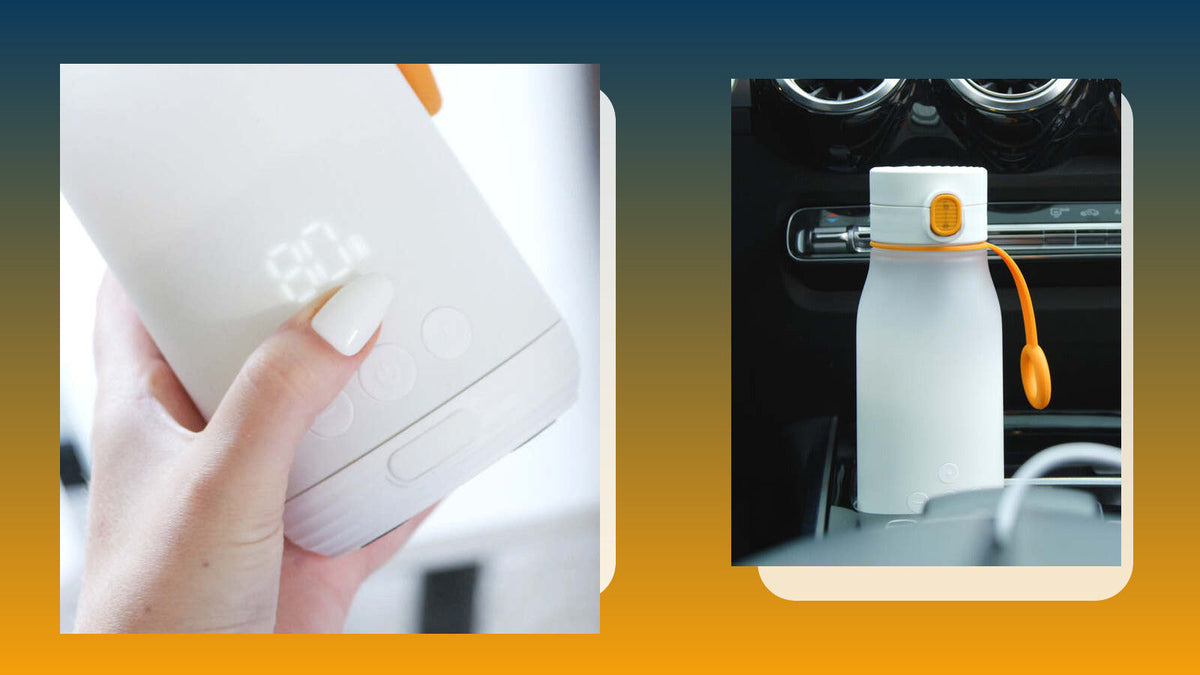
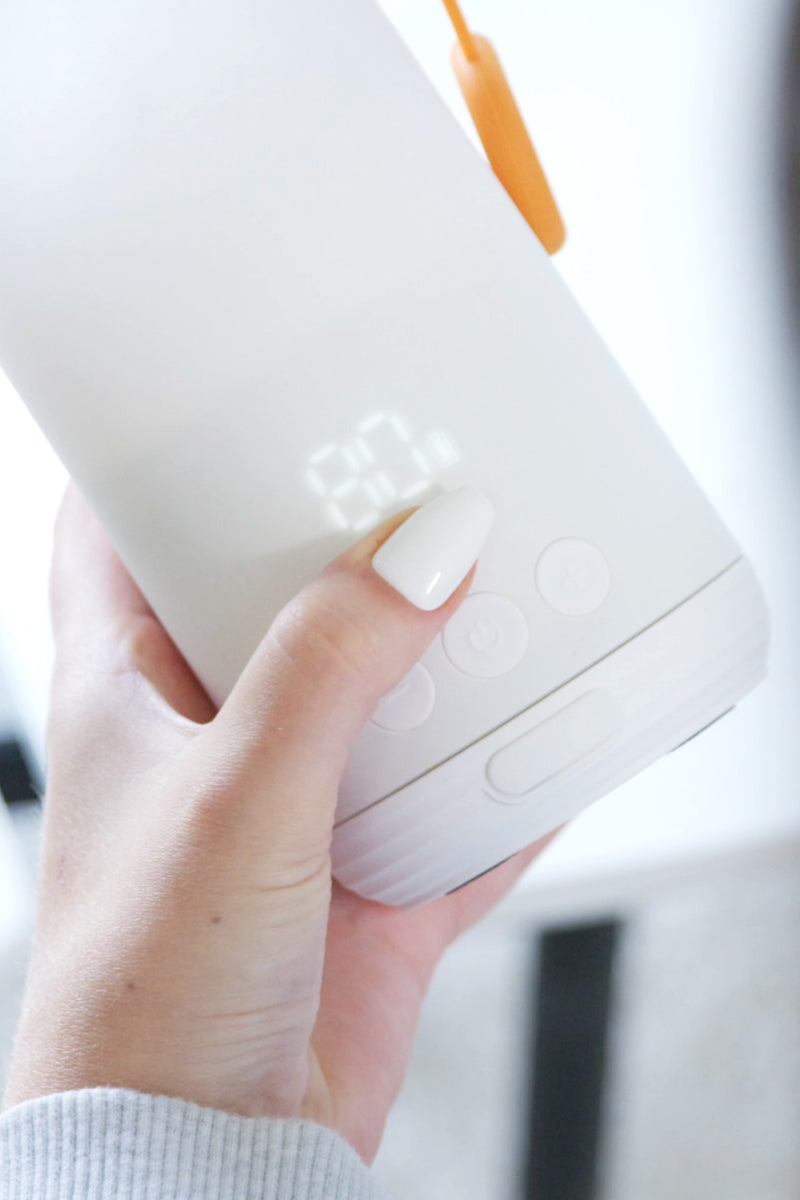
Un calentador ajustado a 98°F, cerca de la temperatura corporal. La pantalla te acerca al objetivo; la prueba de la muñeca sigue teniendo la última palabra.
¿Cómo saber si la leche está demasiado caliente para tu bebé?
Pruébala siempre, incluso con un calentador que muestre la temperatura. Los CDC, la AAP y el NHS describen la misma prueba en la muñeca:
- Gira el biberón suavemente. Los CDC sugieren girar la leche materna para volver a mezclar la grasa que se haya separado, y así también se mezcla la leche más tibia con la más fría.
- Deja caer unas gotas en la parte interna de tu muñeca.
- Debe sentirse tibia o neutra. Si se siente caliente, está demasiado caliente para dársela.
No te guíes por cómo se siente el biberón por fuera. La leche puede estar mucho más caliente por dentro de lo que parece al tocar el biberón, y el calentamiento desigual es precisamente la razón por la que los CDC dicen que nunca calientes la leche materna ni la fórmula en el microondas: crea puntos calientes «que pueden quemar la boca de un bebé». Los CDC también desaconsejan calentar la leche materna directamente en la estufa.
¿Llorará un bebé si la leche está demasiado caliente?
Algunos bebés se apartan o lloran. No cuentes con ello. Un bebé con hambre puede dar unos cuantos tragos antes de reaccionar, y un bebé muy pequeño no puede decirte qué pasa. La prueba de la muñeca existe para que tu bebé nunca sea el termómetro.
Si un biberón sale demasiado caliente, no pasa nada. Ponle la tapa y colócalo bajo el chorro de agua fría, o déjalo en un recipiente con agua fría, sin que el agua toque la tetina. Gíralo y vuelve a probarlo en tu muñeca antes de dárselo. Si crees que tu bebé ya tomó leche demasiado caliente y parece tener dolor, no quiere comer o ves enrojecimiento o ampollas en su boca, llama a tu pediatra.
¿Cómo calentar un biberón de forma segura?
El objetivo es calentarlo de forma suave y uniforme. El método cambia un poco entre la leche materna y la fórmula.
Leche materna
El método de los CDC: mantén el recipiente cerrado y colócalo en un recipiente con agua tibia, o ponlo bajo el chorro de agua tibia, pero no caliente, durante unos minutos. La AAP da el mismo consejo. Gíralo en lugar de agitarlo y luego haz la prueba de la muñeca. Si partes de leche congelada, nuestra guía para almacenar y descongelar leche materna explica los pasos previos.
Fórmula
Los CDC sugieren calentar el biberón de fórmula bajo el chorro de agua tibia, sin que el agua toque la tetina. También puedes no calentarlo: la AAP señala que un biberón preparado con fórmula en polvo y agua del grifo a temperatura ambiente justo antes de la toma está listo para darse sin calentarlo más.
El único caso en que la fórmula empieza caliente es cuando usas agua muy caliente para preparar el polvo. La AAP recomienda agua hervida para los bebés menores de 2 meses, los bebés prematuros y los bebés con el sistema inmunitario debilitado. El NHS pide agua de al menos 70°C (158°F) para preparar la fórmula en polvo, porque el agua así de caliente elimina las bacterias dañinas. En cualquier caso, el siguiente paso es el mismo: enfría el biberón tapado bajo el chorro de agua fría o en un baño de hielo hasta que llegue a la temperatura corporal y luego pruébalo en tu muñeca. Nuestra comparación sobre calentar leche materna o fórmula explica las diferencias con más detalle.

Servir el agua para un biberón de fórmula desde el Warmer PRO, que tiene un Formula Preparation Mode (modo de preparación de fórmula) que calienta el agua a 158°F (70°C). Esa agua es para preparar la fórmula, no para darla así: primero enfría el biberón preparado a temperatura corporal.
Qué evitar
- Nunca uses el microondas para la leche materna ni para la fórmula. Los CDC y el NHS lo indican para ambas, y la AAP para la leche materna, por los puntos calientes.
- No calientes la leche directamente en la estufa. Los CDC lo mencionan junto con el microondas.
- No uses agua hirviendo para el baño de la leche materna. El agua tibia es suficiente; los CDC lo expresan como «tibia, pero no caliente».
Si estás decidiendo entre un recipiente con agua tibia y un calentador específico, comparamos rapidez, seguridad y limpieza en calentador de biberones o recipiente con agua tibia, y respondemos la pregunta de fondo en ¿necesitas un calentador de biberones?.
¿Cuánto tiempo dura la leche calentada?
Menos que la leche fría en el refrigerador, así que calienta solo la que vayas a usar enseguida.
| Leche | Una vez calentada o a temperatura ambiente | Sobrantes después de una toma | Fuente |
|---|---|---|---|
| Leche materna | Úsala en un plazo de 2 horas | Úsalos en un plazo de 2 horas y luego deséchalos | CDC |
| Fórmula | Úsala en un plazo de 2 horas desde su preparación | Deséchalos en un plazo de 1 hora desde el inicio de la toma; no refrigeres los sobrantes | CDC, AAP |
Si puedes calentar el mismo biberón dos veces es otra pregunta, y la respuesta es distinta para la leche materna y la fórmula. Lo explicamos en ¿es seguro recalentar el biberón del bebé?. Para preparar biberones con antelación para la guardería o un día largo, consulta nuestra lista para preparar biberones para la guardería.
Calentar un biberón de noche y fuera de casa
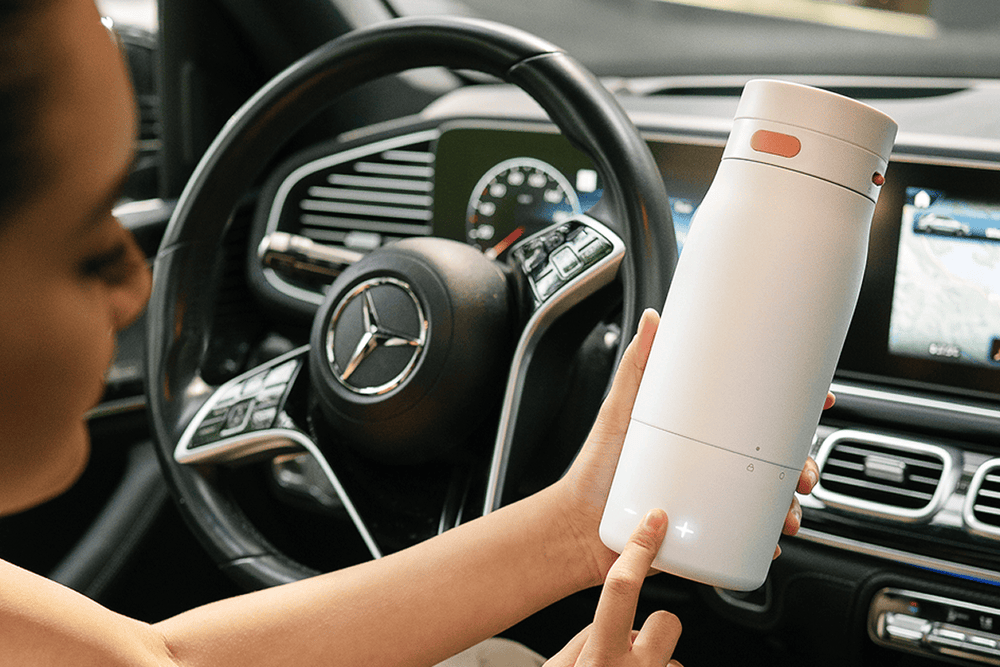
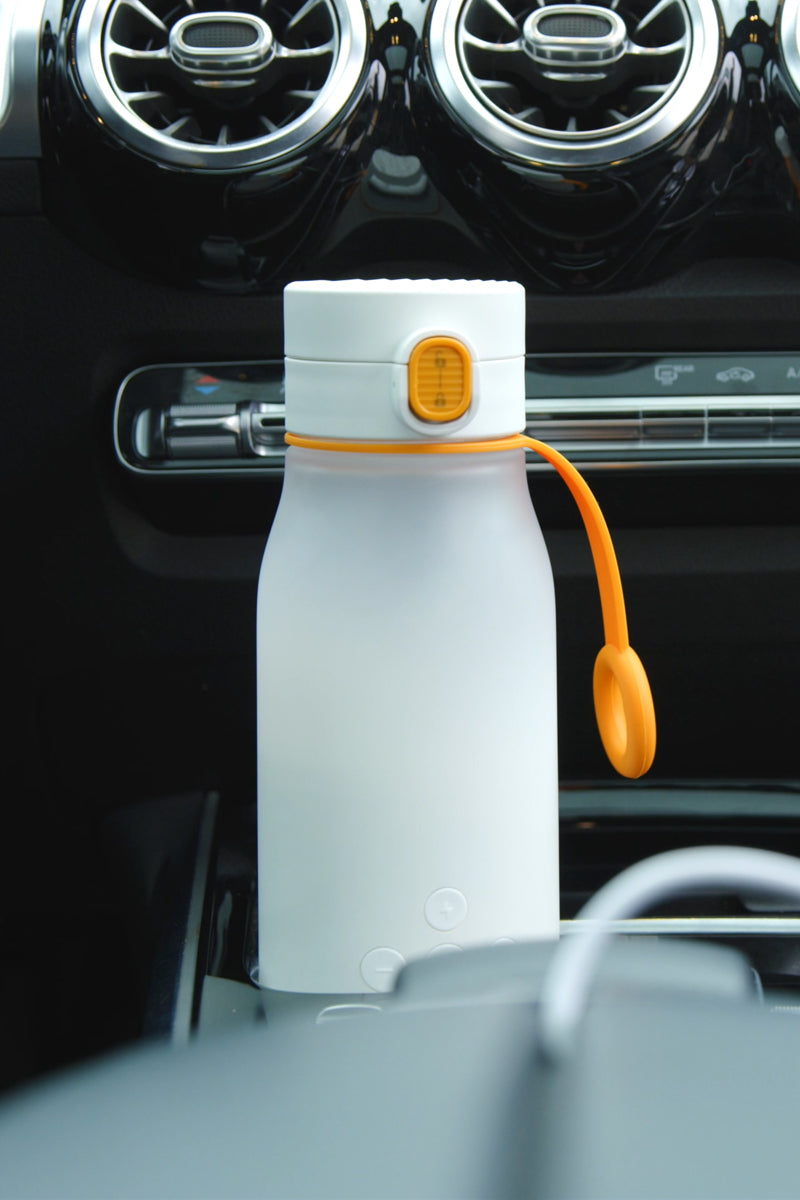
En casa, un recipiente con agua tibia funciona bien. Los momentos más difíciles son la toma de las 3 de la madrugada, cuando no quieres ir a la cocina, y el auto, el aeropuerto o la banca de un parque, donde no hay ninguna llave de agua tibia. Ahí es donde un calentador portátil resulta realmente útil, y donde un bebé que toma la leche fresca te facilita todavía más la vida.

Con un calentador sin cable, alcanzar la temperatura corporal no depende de encontrar una cocina.
Creamos el BuubiBottle Portable Milk Warmer PRO precisamente para esos momentos. Ajustas la temperatura grado a grado, en Fahrenheit o Celsius, y recuerda ese ajuste para la próxima vez, así que de noche no tienes que volver a elegir una cifra a oscuras. Una pantalla iluminada muestra la temperatura en tiempo real, el recipiente de acero inoxidable con aislamiento al vacío tiene capacidad para 17 onzas y funciona todo el día con una carga por USB-C. El BuubiBottle Smart Portable Milk Warmer original es la opción más pequeña, de 10 onzas, y calienta entre 37°C (98°F) y 50°C (122°F). Uses el que uses, termina con la prueba de la muñeca.
Para las rutinas nocturnas en concreto, lee cómo calentar un biberón de noche sin despertarte del todo. Para los días de viaje, consulta cómo calentar leche materna y preparar fórmula fuera de casa.
Lecturas relacionadas
- Guía de temperatura del calentador de biberones portátil para leche materna y fórmula
- ¿Cuánto tarda un calentador de biberones?
- Cómo dar el biberón a un recién nacido
- Tu guía completa de alimentación con fórmula
Preguntas frecuentes
Calentar un biberón es una de esas tareas que parecen tener que salir perfectas, y en realidad solo tiene una regla: nunca caliente. Tibia, fresca o recién sacada del refrigerador, tu bebé recibe la misma buena leche. Si tienes dudas sobre tu propio bebé, sobre todo si nació antes de tiempo, tu pediatra es la persona indicada a quien preguntar.
Fuentes
- Centers for Disease Control and Prevention: Breast Milk Storage and Preparation (actualizado el 14 de agosto de 2026; revisado el 25 de marzo de 2026)
- Centers for Disease Control and Prevention: Preventing Cronobacter in Infants (revisado el 29 de septiembre de 2025)
- American Academy of Pediatrics (HealthyChildren.org): Storing and Preparing Expressed Breast Milk (última actualización: 7/7/2025)
- American Academy of Pediatrics (HealthyChildren.org): How to Safely Prepare Formula with Water (última actualización: 25/2/2026)
- NHS: How to make up baby formula
- NHS: Expressing and storing breast milk
- Gök Ç, Turan T (2026). The Effects of Feeding Breast Milk at Different Temperatures on Newborns: A Systematic Review and Meta-Analysis. Breastfeeding Medicine, 21(4):265-274. doi:10.1177/15568253251413231
- Uygur O, Yalaz M, Can N, Koroglu OA, Kultursay N (2019). Preterm Infants May Better Tolerate Feeds at Temperatures Closer to Freshly Expressed Breast Milk: A Randomized Controlled Trial. Breastfeeding Medicine, 14(3):154-158. doi:10.1089/bfm.2018.0142
- Ferrara-Gonzalez L, Kamity R, Htun Z, Dumpa V, Islam S, Hanna N (2025). From Warm to Cold: Feeding Cold Milk to Preterm Infants with Uncoordinated Oral Feeding Patterns. Nutrients, 17(9):1457. doi:10.3390/nu17091457
Revisado médicamente por el Dr. Yang. Última revisión: 30 de septiembre de 2026.
Aviso: Este artículo tiene únicamente fines educativos y no sustituye el consejo, diagnóstico ni tratamiento médico profesional. Consulta siempre a tu pediatra o a otro profesional de la salud calificado si tienes cualquier pregunta sobre la salud o la alimentación de tu bebé.


Dejar un comentario
Todos los comentarios se revisan antes de su publicación.
Este sitio está protegido por hCaptcha y se aplican la Política de privacidad de hCaptcha y los Términos del servicio.