


Quick answer: Good baby food combinations pair a sweet fruit or starchy vegetable with a milder or iron-rich one - such as apple + carrot, pear + pea, banana + oatmeal, or sweet potato + chicken. Introduce each ingredient on its own first, blend two you have already cleared, keep the texture smooth and age-appropriate, and never add honey before 12 months.
By Katie Gaston, Social Content Writer, Quark Baby. Information reviewed against AAP and Health Canada infant-feeding guidance.
What are the best baby food combinations?
The best baby food combinations pair a naturally sweet ingredient with a milder, iron-rich, or strong-flavored one so the flavors balance and each meal delivers a wider range of nutrients. Reliable starting pairs include apple + carrot, pear + pea, banana + yogurt, blueberry + mango, and sweet potato + chicken. Once your baby has tried single-ingredient purees with no signs of allergy, combining them adds nutrient variety (including iron-rich foods the AAP prioritizes from 6 months), builds adventurous eaters through early flavor exposure, and lets you batch and freeze meals to save time.
Core ingredients and what they pair with
The best combinations start with versatile base purees:
Apple - High in fiber and vitamin C. Pairs beautifully with carrot, spinach, and butternut squash.
Banana - Rich in potassium and naturally creamy. Works well with thinned peanut puree, avocado, and yogurt.
Blueberry - Packed with antioxidants. Delicious with mango, pear, and peach.
Butternut Squash - A beta-carotene powerhouse with a naturally sweet taste. Complements apple, beans, and yogurt.
Carrot - Full of vitamin A and slightly sweet. Mixes nicely with pear, sweet potato, and quinoa.
Mango - Tropical and vitamin C-rich. Pairs with banana, peach, and yogurt.
Pear - Mild and fiber-rich. Goes well with peas, avocado, and a dash of cinnamon.
Peas - A surprising source of protein and iron. Balances nicely with sweet fruits like apple, mango, and pineapple.
Spinach - Iron and folate-rich, though strong-flavored on its own. Best mixed with pear, yogurt, or a sprinkle of parmesan.
Sweet Potato - Creamy and nutritious. Excellent with chicken, beans, and warming spices like cinnamon.
How do I make homemade baby food combinations?
Making homemade baby food combinations is straightforward once you have a system: cook and puree single ingredients, freeze them in portions, then mix two cleared purees at feeding time.
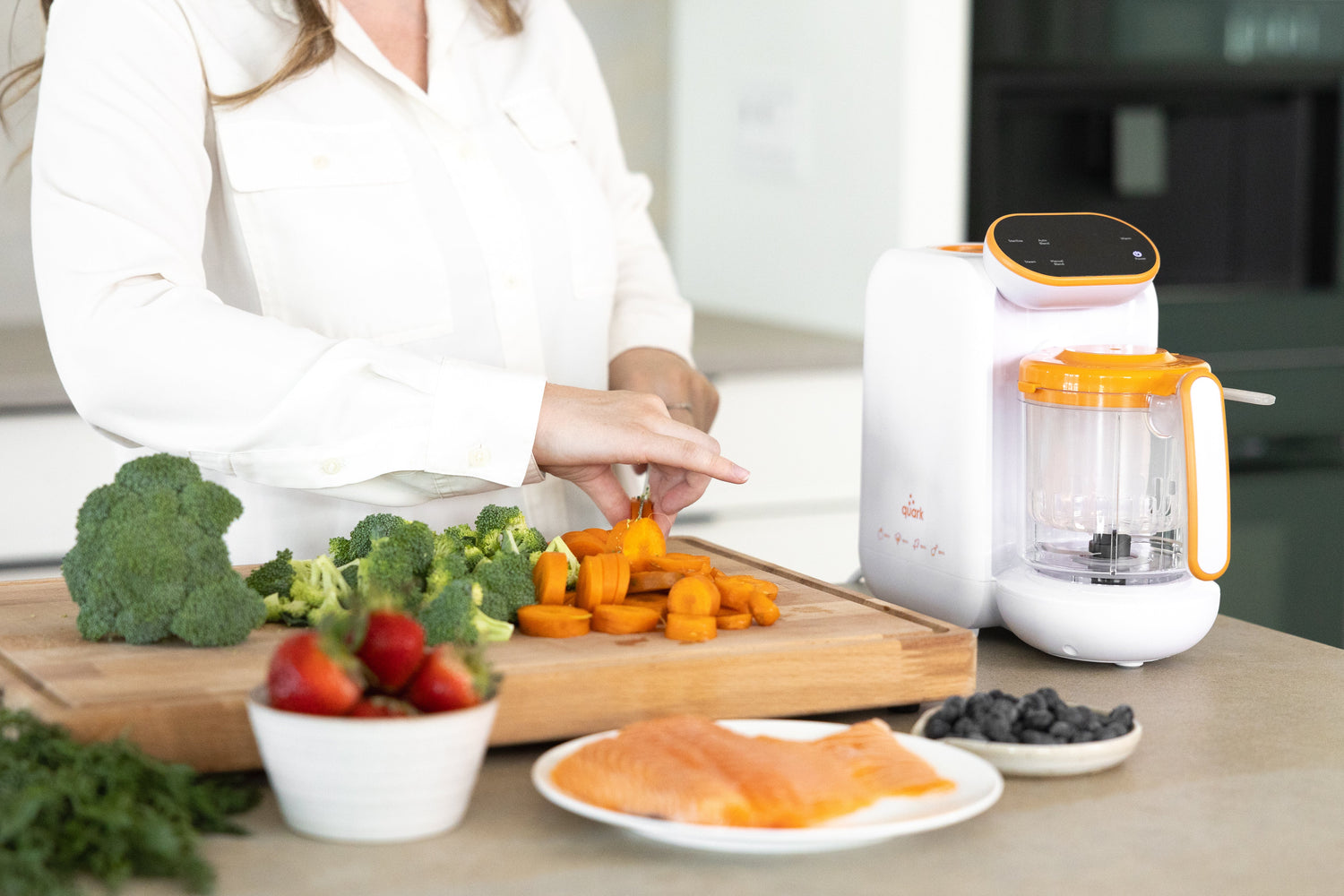
Start with individual purees - Steam, bake, or boil fruits and vegetables until soft enough to blend completely smooth. Steaming retains the most nutrients; roasting deepens flavor. A one-step food maker like Quook steams and blends in the same bowl, so you go from raw carrot to smooth puree without a separate pot and blender - handy when batching five or six bases at once.
Freeze in portions - Silicone ice cube trays work perfectly; each cube is roughly one serving. Once frozen, store in labeled freezer bags with the date.
Mix and match - At feeding time, thaw a couple of cubes and combine in equal amounts, then adjust the ratio to your baby's preference.
Taste and tweak - If something is too tart, add more of a sweeter puree, or stir in a little plain whole-milk yogurt or a pinch of cinnamon. Never sweeten with honey before 12 months (see safety note below).
Best homemade baby food combinations by ingredient
Dozens of tried-and-tested combinations organized by main ingredient. Adjust ratios to your baby's taste, and keep every blend smooth for younger babies. New to single fruits? Start with The 7 Best Fruits for Babies before you begin pairing them.
🍎 Apple Baby Food Combinations
- Apple + Carrot - Naturally sweet with an earthy undertone
- Apple + Spinach - A gentle way to introduce greens
- Apple + Butternut Squash - Smooth and perfect for fall
- Apple + Yogurt - Like a creamy apple dessert (use plain whole-milk yogurt)
- Apple + Baby Oatmeal - Iron-fortified oatmeal makes it taste like apple pie for breakfast
🍌 Banana Baby Food Combinations
- Banana + Peanut Puree - Protein-packed; blend smooth peanut butter thinned with water or banana into the puree (never thick globs) to introduce peanut early and safely
- Banana + Yogurt - Probiotic-rich and gentle on the tummy
- Banana + Avocado - Creamy and full of healthy fats
- Banana + Oatmeal - A filling, iron-supporting breakfast
- Banana + Bean Puree - Adds plant-based protein and iron
🫐 Blueberry Baby Food Combinations
- Blueberry + Mango - Bright and tropical
- Blueberry + Banana - Naturally sweet with antioxidants
- Blueberry + Peach - Fragrant and smooth
- Blueberry + Yogurt - Perfect for breakfast
- Blueberry + Oatmeal - Fiber-rich and colorful
🎃 Butternut Squash Baby Food Combinations
- Squash + Pear - Mildly sweet and seasonal
- Squash + Bean - Hearty and iron-rich
- Squash + Banana - Extra creamy texture
- Squash + Yogurt - Gentle on digestion
- Squash + Apple - Sweet with a hint of savory
🥕 Carrot Baby Food Combinations
- Carrot + Apple + Sweet Potato - A vitamin-packed trio
- Carrot + Pear + Sweet Potato - Naturally sweet and vibrant
- Carrot + Quinoa - Adds texture and protein
- Carrot + Bean - High in fiber and iron
- Carrot + Banana - Creamy and slightly sweet
🍐 Pear Baby Food Combinations
- Pear + Avocado - Incredibly smooth and mild
- Pear + Cinnamon + Oatmeal - Warm and comforting
- Pear + Banana - Gentle and naturally sweet
- Pear + Pea - Balanced and nutritious
- Pear + Carrot - Smooth with a hint of sweetness
🟩 Pea Baby Food Combinations
- Pea + Apple - Sweetness helps ease babies into greens
- Pea + Mango - Fruity with added fiber
- Pea + Banana - Mild and approachable
- Pea + Pineapple - Tropical and bright
- Pea + Pear - Fresh and light
🌿 Spinach Baby Food Combinations
- Spinach + Apple - The apple sweetness balances iron-rich spinach
- Spinach + Pear - Gentle and smooth
- Spinach + Yogurt + Quinoa - A complete meal with protein
- Spinach + Bean - Double dose of iron and fiber
- Spinach + Parmesan + Quinoa - A savory option for adventurous eaters
🍠 Sweet Potato Baby Food Combinations
- Sweet Potato + Chicken - A protein- and iron-rich dinner
- Sweet Potato + Bean - Hearty and vegetarian
- Sweet Potato + Applesauce - Comfort food at its finest
- Sweet Potato + Carrot + Cinnamon - Warm and lightly spiced
- Sweet Potato + Bean + Cumin - A gentle introduction to bolder flavors
What are the best stage 2 baby food combinations?
Stage 2 baby food combinations (roughly 8-10 months) blend two or three ingredients into a slightly thicker, less strained texture and often add protein or grains. Good stage 2 examples are sweet potato + chicken + carrot, spinach + pear + yogurt, and butternut squash + bean. As your baby develops chewing skills, move from completely smooth purees to thicker, mashed, and soft lumpy textures - but only progress texture when your baby is ready, and keep every meal free of choking hazards.
What baby puree combinations work for 6-12 months?
For 6-12 months, the safest baby puree combinations are smooth, runny single- or two-ingredient blends early on - like apple + carrot or banana + yogurt at 6-7 months - thickening to mashed three-ingredient meals such as sweet potato + chicken + carrot by 10-12 months. Prioritize iron-rich pairings (bean, lentil, meat, iron-fortified oatmeal) because the AAP notes iron needs rise sharply at 6 months.
Sample feeding schedule
- 6-7 months: 2 meals per day - simple smooth combinations like Banana + Yogurt, starting with 1-2 tablespoons
- 8-9 months: 3 meals per day - thicker blends like Sweet Potato + Chicken + Carrot
- 10-12 months: 3-4 meals per day - textured combinations like Spinach + Pear + Yogurt
Storage, freezing, and feeding tips
Label and freeze - Transfer frozen cubes to freezer bags with the date and ingredient on each; purees keep about 3 months.
Thaw safely - Best overnight in the refrigerator, or warm gently in a bowl of warm water. Do not refreeze thawed puree.
Wait between new ingredients - Offer each new single ingredient for 3-5 days before combining, so you can spot any allergy or sensitivity.
Start small and add healthy fats - Begin with 1-2 tablespoons per meal; a little avocado, olive oil, or flaxseed boosts nutrition and nutrient absorption.
Safety: what NOT to put in baby food combinations
Most combinations are safe, but a few rules protect your baby's health and come straight from pediatric guidance:
- No honey before 12 months. Honey - raw, cooked, or baked into food - can cause infant botulism, a potentially fatal illness. The AAP and Health Canada are explicit on this. Sweeten with fruit puree instead.
- No cow's milk as a main drink before 12 months. Breast milk or formula stays the main drink to 12 months. Small amounts of plain whole-milk yogurt or cheese mixed into purees from ~6 months are fine - it is cow's milk as a drink that is not recommended early.
- Mind choking-hazard textures. Keep blends smooth for younger babies and progress texture gradually. Avoid whole nuts, whole or halved grapes, popcorn, raw hard vegetables, and thick globs of nut butter. Always supervise feeding with baby seated upright.
- Introduce allergens early and one at a time. AAP guidance supports introducing common allergens (peanut, egg, dairy, wheat, soy, fish) around 6 months once solids have started. Serve peanut as a thin, smooth puree (never whole nuts or stiff spoonfuls), and check with your pediatrician first if your baby has severe eczema or a known food allergy.
- Go easy on salt and added sugar. Babies' kidneys can't handle much salt; flavor with mild spices like cinnamon, ginger, or cumin instead.
When in doubt about your individual baby, your pediatrician is the right person to ask.
Final thoughts
Making your own baby food combinations gives you control over what your baby eats while introducing a wide range of flavors and textures. To speed up cooking, a one-step food maker like Quook steams and blends these combos in a single bowl, and for on-the-go self-feeding of soft fruit a Fruuti fruit feeder lets babies gum safe portions without choking risk — see the 5 best foods to put in a baby fruit feeder.
Frequently asked questions
What are the easiest first baby food combinations?
Start by pairing a sweet fruit with a milder vegetable or grain, such as apple + carrot, pear + pea, or banana + baby oatmeal. Introduce each ingredient on its own for 3-5 days first, watch for any allergic reaction, then blend the two you have already cleared. Keep every combo smooth and lump-free for babies under about 9 months.
Can I add honey or cow's milk to baby food combinations?
No. Never add honey to any food or puree before 12 months - it can cause infant botulism, which the AAP and Health Canada both warn is potentially fatal. Cow's milk should not be given as a main drink before 12 months either, though small amounts of whole-milk plain yogurt or cheese mixed into purees are fine from around 6 months.
When should I introduce common allergens like peanut and egg?
Current AAP guidance supports introducing common allergens - peanut, egg, dairy, wheat - early, around 6 months once your baby is eating solids, rather than delaying. Serve peanut as a thin, smooth puree blended into food (never whole nuts or thick globs of peanut butter), add one allergen at a time, and talk to your pediatrician first if your baby has severe eczema or an existing food allergy.
How do I make sure baby food combinations are not a choking hazard?
For babies 6-12 months, blend combinations to a smooth, runny puree and progress to thicker, mashed and soft lumpy textures only as your baby develops chewing skills. Avoid choking-hazard foods such as whole nuts, whole grapes, popcorn, raw hard vegetables and globs of nut butter. Always supervise feeding and keep baby seated upright.


Leave a comment
All comments are moderated before being published.
This site is protected by hCaptcha and the hCaptcha Privacy Policy and Terms of Service apply.