


Quick answer: The best baby food combinations pair a sweet fruit or vegetable with a milder or iron-rich partner so the flavors balance and each spoonful does more — think apple + carrot, pear + pea, banana + yogurt, or sweet potato + chicken. Introduce each new ingredient on its own for 2–3 days first to watch for a reaction, keep the texture smooth and runny for babies just starting around 6 months, and never add honey before 12 months.
Medically reviewed by Dr. Yang · June 12, 2026.
By Justin Gurinskas, Co-Founder, Quark Baby. Information reviewed against the American Academy of Pediatrics (AAP), the U.S. Centers for Disease Control and Prevention (CDC), Health Canada, and the Canadian Paediatric Society (CPS) infant-feeding and choking-prevention guidance.
This article is for general information and is not medical advice. Talk to your pediatrician before starting solids — especially if your baby was premature, has severe eczema, or has a family history of food allergies. Always serve food in age-appropriate textures, keep your baby seated upright and supervised at every meal, and learn the signs of choking before introducing new foods.
Once your baby is around 6 months old and showing signs of readiness, combining single purees is one of the easiest ways to add variety, nutrients, and new flavors without cooking something different every day. Below we answer the questions parents search most — which pairings actually work, how to build them by age, how to store them safely, and how to keep every combination safe. If you're still deciding whether your baby is ready for solids at all, start with our guide on how to start baby-led weaning.
What are the best baby food combinations?
The best baby food combinations pair a sweeter ingredient with a milder, iron-rich, or stronger-flavored one so the result is balanced and nutrient-dense. Reliable starting pairs include apple + carrot, pear + pea, banana + yogurt, blueberry + mango, and sweet potato + chicken. The CDC recommends letting your baby try one single-ingredient food at a time when you first start solids, so you can spot any reaction; once your baby has tolerated two ingredients separately, you can confidently blend them together. A good rule of thumb parents use is to pair a sweeter food with a less-sweet one — for example, adding carrot or sweet potato to peas or spinach.
Core ingredients and what they pair with
These nine ingredients are easy to puree, widely tolerated, and mix well into dozens of combinations:
- Apple (fiber, vitamin C) — pairs with carrot, spinach, butternut squash, oatmeal
- Banana (potassium, creamy texture) — works with yogurt, avocado, oatmeal, smooth peanut puree
- Blueberry (antioxidants, vitamin C) — delicious with mango, pear, banana
- Butternut squash (beta-carotene, naturally sweet) — complements apple, lentils, yogurt
- Carrot (vitamin A, slightly sweet) — mixes with pear, sweet potato, lentils
- Pear (mild, fiber-rich) — goes with peas, avocado, a pinch of cinnamon
- Peas (plant protein, iron) — balances with sweet fruits like apple, mango, pear
- Spinach (iron, folate, strong-flavored) — best softened with pear, yogurt, or sweet potato
- Sweet potato (beta-carotene, naturally sweet, smooth) — pairs with chicken, peas, apple
Iron matters early: both the AAP and Health Canada highlight that babies need a reliable iron source by 6 months. Pairing an iron-rich food (pureed chicken or other meat, well-cooked lentils, peas, iron-fortified infant cereal) with a vitamin-C-rich fruit like pear, mango, or blueberry helps your baby absorb that iron more efficiently.
How do I make homemade baby food combinations?
Making combinations at home is a mix-and-match system rather than a recipe:
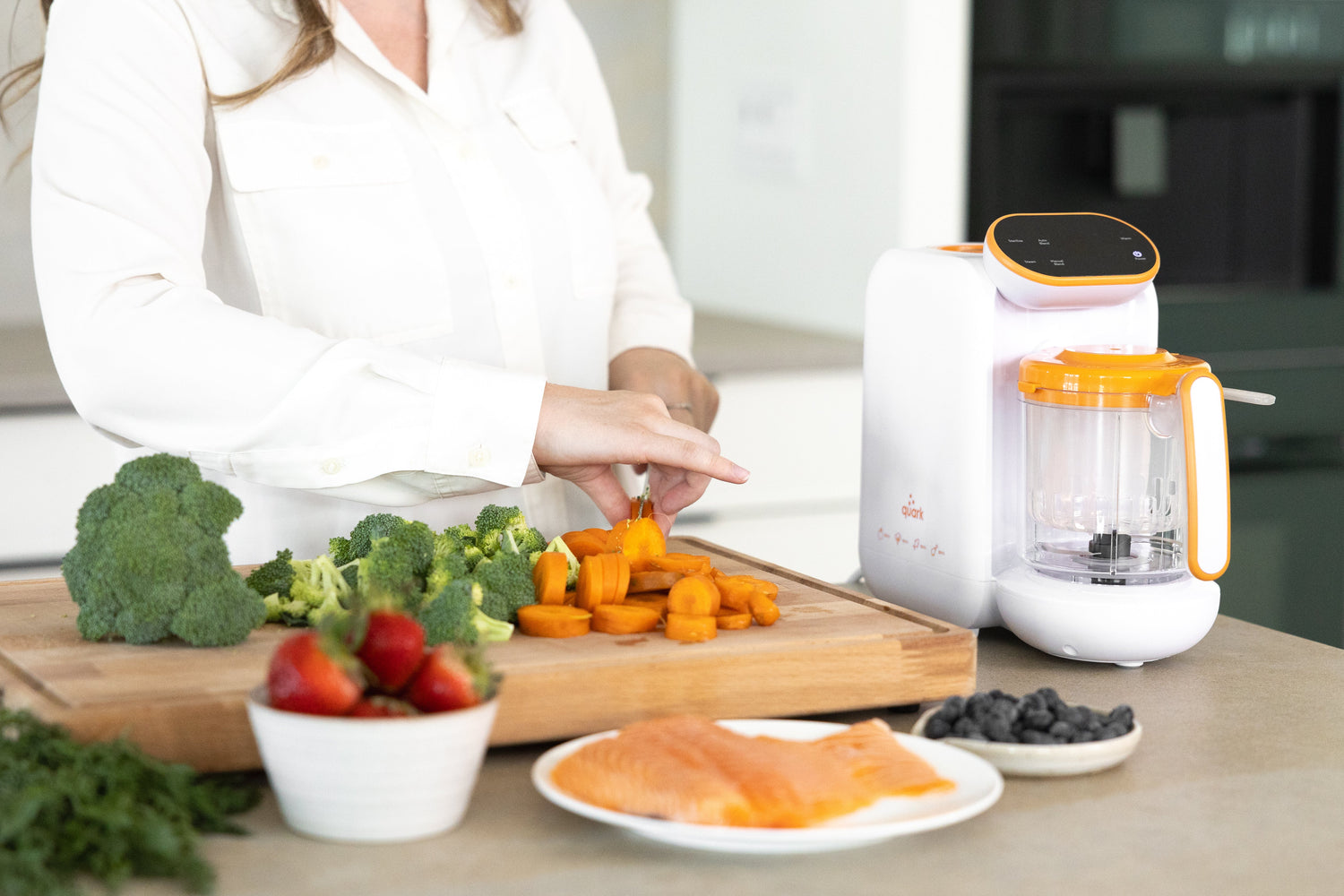
- Cook single purees. Steam, bake, or boil one ingredient at a time until very soft, then blend smooth. An all-in-one tool like the Quook baby food maker steams and blends in one bowl, so you can batch a few single purees in a session.
- Freeze in portions. Spoon each puree into a silicone freezer tray and freeze. A divided tray like the Chiill silicone freezer tray gives you single-serving cubes you can pop out as needed, while Storii food storage containers keep fridge portions sealed and labeled.
- Mix at feeding time. Thaw one cube of each ingredient and stir them together in roughly equal amounts — for example, one apple cube plus one carrot cube.
- Taste and adjust. Thin with breast milk, formula, or water to the right texture, and tweak the ratio toward whatever your baby prefers. Use plain yogurt or a pinch of cinnamon to round out flavor — never honey before 12 months.
What are the best baby food combinations by ingredient?
Once your baby has tried the individual ingredients, these are dependable, parent-tested pairings:
- Apple: + carrot · + spinach · + butternut squash · + plain yogurt · + baby oatmeal
- Banana: + yogurt · + avocado · + oatmeal · + blueberry · + smooth peanut puree (see allergen note below)
- Blueberry: + mango · + pear · + banana · + yogurt
- Butternut squash: + apple · + red lentil · + pear · + yogurt
- Carrot: + pear · + sweet potato · + apple · + red lentil
- Pear: + pea · + avocado · + spinach · + oatmeal
- Peas: + apple · + mango · + pear · + carrot
- Spinach: + pear · + sweet potato · + apple · + yogurt
- Sweet potato: + chicken · + pea · + apple · + carrot
If you're using a fruit feeder for safe self-feeding practice alongside purees, our guide to the 5 best foods to put in a baby fruit feeder pairs well with these combinations.
What are the best baby food combinations by age?
The right combination depends less on the ingredients and more on the texture and number of foods your baby is ready for. The CDC and Health Canada both recommend starting smooth and progressing to thicker, lumpier textures — with Health Canada advising that lumpy textures be offered no later than 9 months.
| Age | Texture | Meals / day | Number of ingredients | Example combinations |
|---|---|---|---|---|
| 6–7 months | Smooth, runny single-strained purees | 1–2 (building up) | 1–2 once each is tolerated | Apple + carrot · Banana + yogurt · Pear + pea |
| 8–9 months | Thicker, less-strained, soft lumps introduced | 2–3 | 2–3, including an iron source | Sweet potato + chicken + carrot · Spinach + pear + yogurt |
| 10–12 months | Textured, mashed, soft finger foods alongside | 3 meals + snacks | 2–4, more family-like flavors | Butternut squash + lentil + apple · Pea + mint + ricotta |
What are good stage 2 baby food combinations?
"Stage 2" usually means around 8–10 months: thicker than a first puree, often two or three ingredients, and ideally including an iron-rich protein or grain. Good stage 2 combinations include sweet potato + chicken + carrot, spinach + pear + yogurt, and butternut squash + red lentil + apple. Health Canada recommends offering iron-rich foods at least twice a day at this stage.
How do I store and freeze baby food combinations?
Batch-cooking only saves time if the food stays safe. General food-safety guidance for homemade purees:
- Refrigerate within 2 hours of cooking. Strained fruit and vegetable purees keep about 2–3 days in the fridge; combinations that include meat keep about 1–2 days.
- Freeze for longer storage. Plain fruit and vegetable purees keep well frozen for up to about 3 months for best quality; combinations with meat are best used within 1–2 months. Label every cube or container with the ingredients and date.
- Thaw in the fridge overnight, or gently warm a frozen cube. Always stir and test the temperature before serving.
- Do not refreeze thawed puree, and discard anything left in the bowl your baby has eaten from, since saliva introduces bacteria.
For a full breakdown of containers, labeling, and timelines, see our guide to baby food storage.
Safety: what NOT to put in baby food combinations
A few rules are non-negotiable and come straight from pediatric authorities:
- No honey before 12 months. The AAP and Health Canada both warn that honey — including in baked goods or as a sweetener — can cause infant botulism, which is potentially fatal. Use plain yogurt or fruit to sweeten instead.
- No cow's milk as a main drink before 12 months. Small amounts of plain whole-milk yogurt or cheese stirred into a puree are fine from around 6 months, but cow's milk shouldn't replace breast milk or formula as the main drink in the first year.
- Mind choking hazards. The CDC lists whole or uncut grapes, berries, and melon balls; raisins and other dried fruit; whole or chopped nuts and seeds; chunks or spoonfuls of nut butter; and tough or large chunks of meat as hazards. In combinations, blend these smooth or leave them out — never stir a glob of thick nut butter into a puree.
- Go easy on salt and added sugar, and keep textures matched to your baby's stage. Mild spices like cinnamon, ginger, or cumin are a better way to add interest.
A pediatrician-aligned note on allergens
Combinations are actually a convenient way to introduce common allergens. Current AAP guidance recommends against delaying allergenic foods: peanut, egg, dairy, wheat, soy, and fish can be introduced around 6 months once your baby is eating solids. Serve peanut as a thin, smooth puree blended into a familiar food (never whole nuts or a thick spoonful), and introduce one new allergen at a time so any reaction is easy to trace. If your baby has severe eczema or a known food allergy, the AAP advises talking to your pediatrician or allergist first — for the highest-risk infants, peanut may be introduced as early as 4–6 months, sometimes after allergy testing.
Make combinations easier with the right tools
Homemade combinations come down to two things: clean single purees and safe storage. The Quook all-in-one baby food maker steams and blends each ingredient in a single bowl, and the Chiill freezer tray plus Storii storage containers turn a batch into weeks of grab-and-mix cubes. Browse the full Quark Baby feeding range to build your kit, and explore more recipes under Cooking + Eating.
Frequently asked questions
What are the easiest first baby food combinations?
Pair a sweet fruit with a milder vegetable or grain — apple + carrot, pear + pea, or banana + baby oatmeal are great starting points. Introduce each ingredient on its own for 2–3 days first, then blend the two your baby has already tolerated. Keep the texture smooth and runny for babies just starting solids around 6 months.
Which fruits and vegetables pair well together for a baby?
A simple rule is to combine a sweeter food with a less-sweet one: carrot or sweet potato with peas or spinach, or apple and pear with stronger greens. Vitamin-C-rich fruits like pear, mango, and blueberry pair well with iron-rich foods like lentils, peas, or pureed meat because vitamin C helps your baby absorb the iron.
How do I make homemade baby food combinations?
Cook one ingredient at a time until very soft, blend each into a smooth puree, and freeze them in single-serving cubes. At feeding time, thaw one cube of each food and stir them together in roughly equal amounts, thinning with breast milk, formula, or water to the right texture. This mix-and-match system lets you build dozens of combinations from a handful of base purees.
What baby food combinations work for 6 to 12 months?
At 6–7 months, stick to smooth two-ingredient purees like apple + carrot or banana + yogurt. At 8–9 months, move to thicker, three-ingredient combinations that include an iron source, such as sweet potato + chicken + carrot. From 10–12 months, offer more textured, family-like combinations alongside soft finger foods. Health Canada recommends introducing lumpy textures no later than 9 months.
How long do homemade baby food combinations last?
Refrigerate purees within 2 hours of cooking. Plain fruit and vegetable combinations keep about 2–3 days in the fridge and up to about 3 months frozen for best quality; combinations that include meat are best used within 1–2 days refrigerated or 1–2 months frozen. Label everything with the date and ingredients, thaw in the fridge, and never refreeze a thawed puree.
Can I add honey or cow's milk to baby food combinations?
No honey before 12 months — the AAP and Health Canada warn it can cause infant botulism. Cow's milk shouldn't be the main drink before 12 months either, though a small amount of plain whole-milk yogurt or cheese stirred into a puree is fine from around 6 months. To sweeten a combination, use fruit or plain yogurt instead.
When should I introduce common allergens like peanut and egg?
Current AAP guidance supports introducing common allergens — peanut, egg, dairy, wheat, soy, fish — around 6 months once solids begin, rather than delaying. Serve peanut as a thin, smooth puree blended into food (never whole nuts or a thick glob), and add one allergen at a time. If your baby has severe eczema or a known food allergy, talk to your pediatrician or allergist first; for some high-risk infants peanut may be introduced as early as 4–6 months after testing.
How do I make sure baby food combinations are not a choking hazard?
Keep textures smooth and runny for babies 6–9 months, then progress gradually to thicker, mashed, and soft lumpy foods as chewing develops. Blend out or leave out the CDC's listed hazards — whole grapes and berries, raisins, whole or chopped nuts, chunks or spoonfuls of nut butter, and large pieces of meat. Always have your baby seated upright in a high chair, keep mealtimes calm, and supervise every bite.


Leave a comment
All comments are moderated before being published.
This site is protected by hCaptcha and the hCaptcha Privacy Policy and Terms of Service apply.