



Los primeros 90 días no necesitan una estantería enorme de biberones. Necesitan un sistema pequeño que funcione, un ritmo de limpieza y un plan claro sobre qué añadir solo cuando la rutina sea real.

A menudo se dice a los padres primerizos que estén preparados para todo. Ese consejo llena encimeras y cajones de piezas antes incluso de que el bebé haya mostrado un ritmo de tomas.
Un plan mejor para los primeros 90 días es por etapas. Empiece con las piezas de biberón que resuelven tomas reales. Construya un ritmo de lavado y secado. Añada tamaño, flujo, viaje o apoyo para calentar solo cuando una rutina real lo pida.
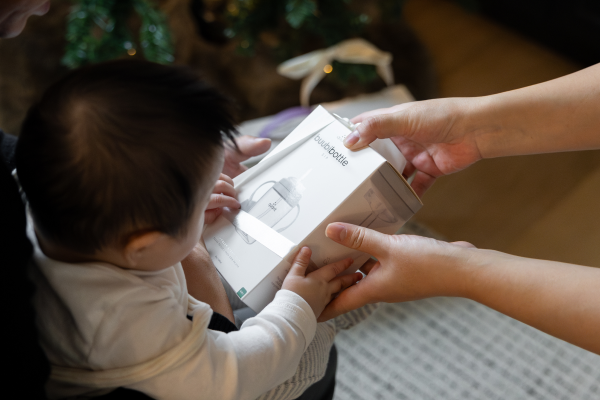
Un sistema de biberones por etapas encaja de forma natural con ese plan cuando ofrece a los padres un biberón pequeño para el principio, un biberón mayor para la siguiente etapa, tetinas compatibles y una vía posterior de transición al vaso, sin obligar a comprarlo todo el primer día.
Días 1-30: mantenga el sistema pequeño
El primer mes es de aprendizaje. Está aprendiendo si las tomas con biberón son ocasionales, diarias, compartidas de noche, si se usan para leche materna extraída, fórmula infantil, lactancia mixta o para planificar la guardería.
El error es comprar como si todas esas respuestas ya se supieran.
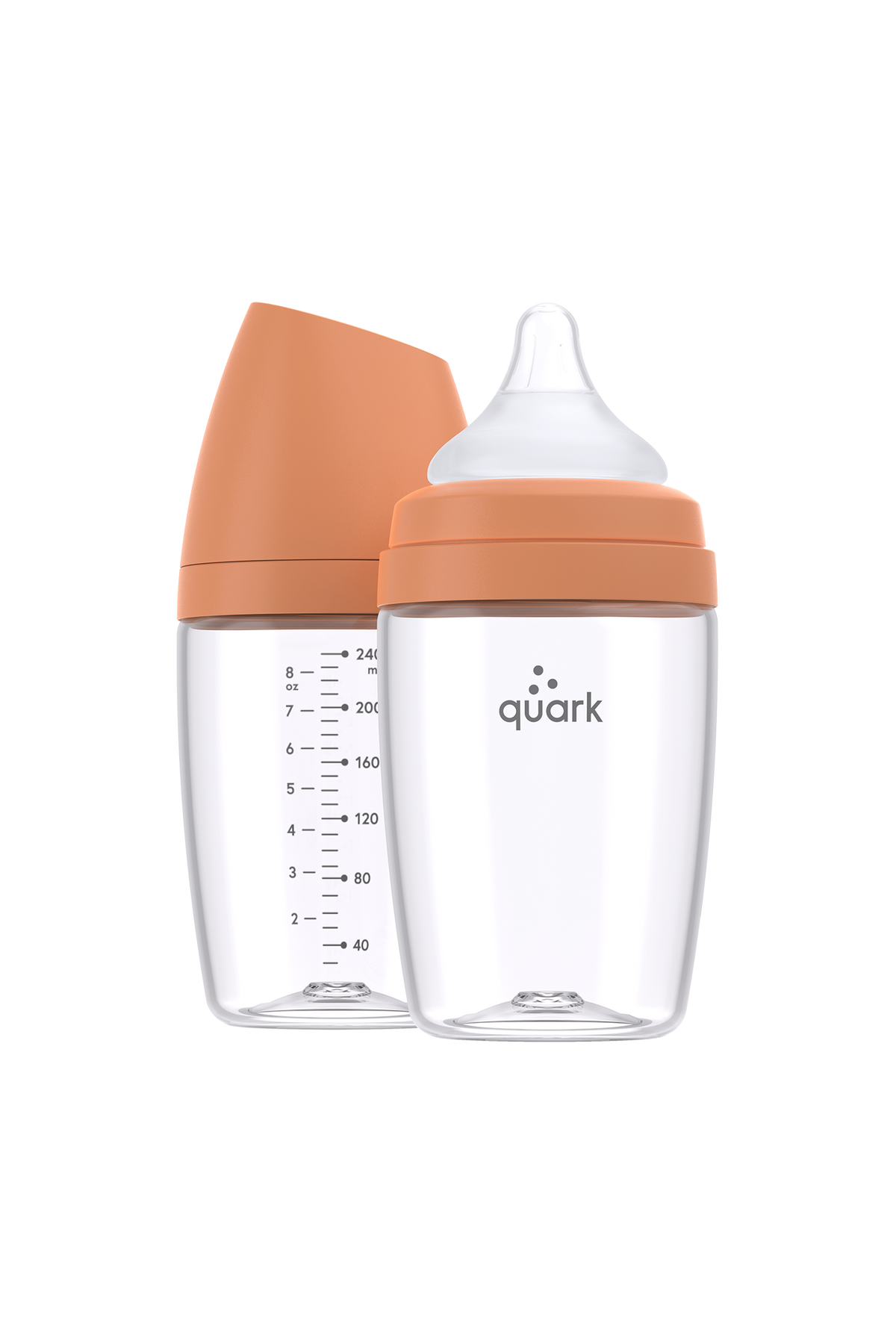
Empiece con una rotación pequeña de biberones que se pueda lavar y reutilizar sin que cada toma parezca un problema de cadena de suministro. Según el conocimiento de producto de QB, BuubiBottle Mini es el biberón de 5 oz / 150 ml para las primeras tomas, y Max es el biberón mayor de 8 oz / 240 ml para tomas más grandes.
Lo que más importa
Las características más útiles son prácticas: llenado fácil, limpieza fácil, una vía de tetinas, un biberón que no parezca frágil y piezas que pertenezcan al mismo sistema.
Días 31-60: ajuste la rotación
Es el momento adecuado para añadir según la evidencia de su casa, no según la ansiedad de la lista de nacimiento.
Añada capacidad cuando el problema sea rellenar
Si el biberón pequeño se está rellenando constantemente, incorpore el biberón mayor al uso habitual. Ahí es donde Max resulta útil.
Añada tetinas cuando la duda sea el flujo
El flujo de la tetina debe seguir al bebé, no a la lista de nacimiento. Si las tomas son estresantes, inusualmente lentas o aparatosas, hable con su profesional de pediatría o de lactancia y elija los flujos de recambio con cuidado.
Días 61-90: planifique la siguiente etapa
Quizá esté pensando en salidas más largas, en el etiquetado para la guardería, en rutinas de calentado del biberón o en cómo será más adelante la transición al vaso. La AAP señala que se puede empezar a ofrecer un vaso hacia el momento en que el bebé empieza con los sólidos e ir dejando el biberón de forma gradual a lo largo de los primeros años. HealthyChildren.org explica esa transición.
Ese futuro no hace falta comprarlo entero en los primeros 90 días. Solo hace falta que sea posible.
Un plan sencillo de set inicial
| Etapa | En qué centrarse | Qué evitar |
|---|---|---|
| Días 1-30 | Rotación pequeña, piezas limpias, montaje sencillo | Comprar todos los accesorios |
| Días 31-60 | Ajustar el número y el tamaño de los biberones | Adivinar antes de que aparezcan los patrones |
| Días 61-90 | Planificar viajes, guardería y la etapa siguiente | Cambiar de sistema demasiado pronto |
Si su punto de dolor pasa a ser calentar, esterilizar, cocer al vapor y triturar en una sola estación de cocina, compare Quook por separado. Es una herramienta de rutina, no una compra de biberón obligatoria para el primer día.
Preguntas frecuentes
¿Qué debería incluir un primer set inicial de biberones?
Sí. Empiece con una rotación pequeña que funcione. Priorice biberones que encajen en las primeras tomas, una vía mayor para tomas más grandes, tetinas compatibles y piezas que se limpien con facilidad.
¿Necesito una estantería llena de biberones para recién nacido?
Normalmente no. Compre lo justo para cubrir su día real y añada después, cuando conozca el patrón.
¿Cuándo debería añadir biberones más grandes?
Sí. Añada biberones más grandes cuando rellenar se convierta en el problema. Los biberones más grandes ayudan cuando la toma o la salida se ha quedado corta con el tamaño pequeño.
¿Debería formar parte Quook de los primeros 90 días?
Solo si resuelve su rutina. Quook tiene sentido para familias que quieren una única estación de cocina para calentar biberones, cocer al vapor, triturar y esterilizar.
¿Es esto consejo sobre alimentación?
No. Es información de planificación de producto. Siga a su profesional de pediatría para cantidades de las tomas, crecimiento, fórmula infantil, leche materna o dudas médicas.
Fuentes
- Quark Baby: página de producto de BuubiBottle Mini
- Quark Baby: página de producto de Quook
- American Academy of Pediatrics / HealthyChildren.org: From Bottle to Cup
Este artículo es información general sobre productos y listas de nacimiento, no consejo médico.
Revisión médica: Dr. Yang. Última revisión: 29 de julio de 2026.




Dejar un comentario
Todos los comentarios se revisan antes de su publicación.
Este sitio está protegido por hCaptcha y se aplican la Política de privacidad de hCaptcha y los Términos del servicio.