


8 Must‑Have Essentials for Your Baby’s First Summer
We’ve curated the ultimate checklist to ensure your baby’s first summer is both safe and enjoyable, whether it’s a splash in a shallow pool or a breezy stroll outdoors.
1. Breathable Baby Carrier
When the heat rises, prioritize carriers crafted from ultralight, moisture-wicking fabrics. A soft knit wrap or mesh-structured carrier offers hands-free mobility while maintaining cooling airflow. This allows your baby to stay close and keeps you both cooler than traditional wraps.
Pro tip: Go for neutral or light hues to deflect sunlight, and pair with a detachable mini-bandana to absorb any baby drool or spit-up.
2. Clip-On Portable Fan
Compact yet powerful, a clip-on fan is indispensable during summer excursions. Attach it to pram handles, car-seat bars, or diaper bags. Opt for models with rechargeable batteries, gentle airflow settings, and safety grills. Bonus points for models that swivel—perfect for redirecting breezes over you too.
3. UPF 50+ Sun Hat with Chin Strap
Before your baby reaches six months, shade is especially important. A wide-brimmed, UPF 50+ hat covers head, ears, and neck. Adjustable chin straps ensure a snug fit, even during curious wriggling and playful moments.
4. Pop-Up Sun Tent for On-the-Go Shade
For beach, park, or backyard days, a lightweight pop-up tent with 3‑side UV protection and mesh panels is an outdoor essential. Crafted with UPF 50+ fabric, it shields from direct sun and offers a breeze-friendly environment.
5. Retractable Car Window Shades
Sunny drives can expose babies to intense glare—even with tinted windows. Retractable interior shades are simple to install, adjustable, and retract when not needed, offering seamless protection without impeding visibility.
6. Mineral-Based Sunscreen (6+ Months)
Once your baby hits six months, apply a broad-spectrum, mineral sunscreen featuring zinc oxide or titanium dioxide. Choose hypoallergenic, fragrance-free formulas. Apply 15 minutes before sun exposure and reapply every two hours—especially after water play.
7. Breastmilk or Formula Cooler
For outings that go beyond the hour mark, a compact insulated cooler keeps breastmilk or formula chilled up to 20 hours. Models with internal compartments or ice-pack sleeves can even serve double duty—cooling medications or teether toys.
8. UPF Rash Guard & Swim Diaper Combo
A lightweight rash guard with long sleeves and UPF 50+ shielding is ideal for beach days. Pair with reusable swim diapers featuring leak-proof waistbands. Choose bright colors for easy spotting, and ensure the rash guard dries quickly when you're out of the water.
Planning Your Perfect Summer Day
Maximize enjoyment by creating a “summer-ready” kit:
| Time | Activity | Essentials |
|---|---|---|
| Morning | Beach or pool splash pad | Rash guard, swim diaper, waterproof sun hat |
| Midday | Shaded rest or nursing break | Pop-up tent, portable fan, cooler with bottled milk or formula |
| Afternoon | Stroll or café patio session | Lightweight carrier or stroller, clip-on fan, retractable car shades |
| Anytime | Sun protection | Mineral sunscreen (6+ months) and head-to-toe coverage for under 6 months |
Safety & Comfort Tips
- Stay hydrated: If your baby is older than 6 months and used to sips of water, offer small doses frequently.
- Monitor skin: Check for signs of overheating—flushed cheeks, wet palms, or unusual fussiness.
- Keep an eye on UV index: On high UV days, stick to early morning or late afternoon outings.
- Plan cooldown breaks: Whether it’s under a shaded tree or inside an air-conditioned café, incorporate rest periods into each outing.
What does your baby actually need for their first summer?
The honest short list is four things: shade, airflow, hydration, and sun protection. A UPF hat and a light cover-up, a way to keep air moving (a breathable carrier or a clip-on fan), enough milk or formula for a hot day, and shade wherever you go. For babies under 6 months, the American Academy of Pediatrics says to keep them out of direct sun and rely on clothing and shade first, using a little sunscreen only where covering up isn't possible.
Most of what ends up on a "must-have" list past those four is comfort, not necessity. Start here and add as you go.
How do you keep a baby cool in hot weather?
Keep them in the shade, dress them in one light, loose layer, and keep air moving. Watch for overheating — flushed skin, fast breathing, fussiness, or fewer wet diapers — and head somewhere cool if you see it. On very hot days, the simplest fix is to plan outings for early morning or late afternoon and skip the midday heat entirely.
Babies can't sweat as efficiently as adults, so they heat up faster than you'd expect. When in doubt, feel the back of their neck, not their hands.
What is baby heat rash, and how do you treat it?
Heat rash (also called prickly heat or miliaria) is one of the most common summer skin issues in babies. It shows up as clusters of tiny red or pink bumps, sometimes with tiny clear blisters, in the places where sweat gets trapped: the neck and skin folds, the upper back and chest, the diaper area, and under a hat. It happens because a baby's sweat glands are still developing and block easily in hot, humid weather or under too many layers. It looks uncomfortable, but it is usually harmless and clears on its own.
The fix is almost always to cool the skin and let it breathe:
- Move somewhere cooler and take off the extra layer — heat rash is a signal your baby is too warm.
- Keep the skin cool and dry. Dress your baby in one loose, light, breathable layer (cotton), and pat sweat away rather than leaving it on the skin.
- Skip heavy creams and powders. Thick ointments and talc can trap more heat and block pores further; plain cool air is what helps.
- A cool (not cold) bath and letting the skin air-dry can soothe it.
Most heat rash fades within a few days once your baby cools down. Check with your pediatrician or doctor if the rash doesn't improve in about three days, if the bumps look infected (spreading redness, pus, or swelling), or if your baby also has a fever or seems unwell — those can point to something other than simple heat rash. When in doubt, a quick call to your provider is always reasonable.
How do you protect a baby from bugs and mosquitoes in summer?
Bug bites are more than an itch — in some areas they carry a small risk of illness — so shade-and-cover comes first, and repellent is added by age.
- Under 2 months: do not use insect repellent. Rely on physical protection instead — fine mosquito netting over the stroller or car seat, and light, loose long sleeves and pants. Avoid being out at dawn and dusk when mosquitoes are most active.
- 2 months and older: the American Academy of Pediatrics considers repellents with DEET up to about 30%, or picaridin, appropriate for babies. Apply it sparingly to exposed skin and clothing — not on the hands (which go in the mouth), and not around the eyes or mouth. One application a day is generally enough; wash it off with soap and water once you're back inside.
- Don't use combined sunscreen-plus-repellent products. Sunscreen is reapplied often; repellent should not be — so keep them separate. Apply sunscreen first, then a little repellent over it.
- Skip scented lotions and soaps outdoors, which can attract insects.
If your baby has a strong reaction to a bite (a lot of swelling, signs of infection, or any trouble breathing), contact your doctor right away.
How do you keep breastmilk or formula cold on a summer outing?
Use an insulated container with a cold source, and keep it out of the sun. Breastmilk stays safe in a cooler with ice packs for about 24 hours; prepared formula should be used within 2 hours at room temperature, or kept chilled and used within 24. When in doubt on a hot day, make bottles fresh rather than carrying them warm.
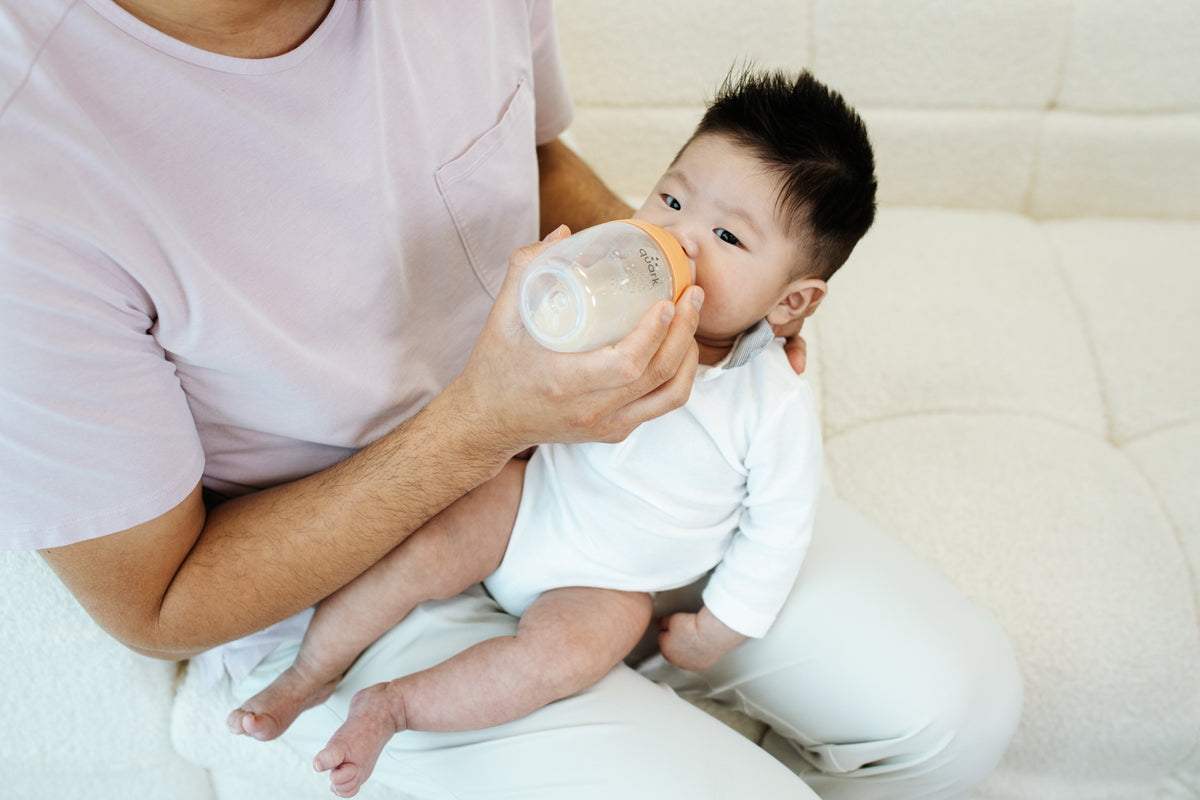
This is the one corner of a summer kit where our gear fits honestly. Storii is a food-storage set with clip-in ice packs, built to keep milk and purees cold in a diaper bag. For feeds on the go, the BuubiBottle Sip and Mini are light and quick to fill. We don't make carriers or sun hats — plenty of others do that well.
Common questions
Can babies wear sunscreen? Yes, for babies over 6 months. A mineral (zinc or titanium) sunscreen is fine on exposed skin. Under 6 months, keep them out of direct sun and use clothing and shade instead, with a small amount of sunscreen only where you can't cover up.
How do I know if my baby is too hot? Feel the back of their neck or chest — warm and dry is fine, sweaty or flushed means cool them down. Fewer wet diapers, fast breathing, or unusual fussiness in the heat are signs to get out of the sun and offer a feed.
Do babies need extra water in summer? No, not under 6 months. Breastmilk or formula covers hydration, and water isn't recommended. They may just want to feed more often in the heat, which is normal.
How do you treat heat rash on a baby? Cool your baby down, remove the extra layer, and keep the skin cool, dry, and in one light breathable layer. Skip heavy creams and powders, which trap heat. It usually clears in a few days — call your doctor if it lasts longer than about three days, looks infected, or comes with a fever.
Can babies use bug spray or insect repellent? No, not under 2 months — use mosquito netting and light long clothing instead. From 2 months, the AAP considers DEET up to 30% or picaridin appropriate, applied sparingly to exposed skin (never on the hands), once a day, and washed off indoors. Don't use combined sunscreen-and-repellent products.
Source: American Academy of Pediatrics — Sun Safety, Heat Rash and Insect Repellent guidance (HealthyChildren.org). Medically reviewed by Dr. Yang.
Sources
- American Academy of Pediatrics — Sun Safety: “Keep babies younger than 6 months out of direct sunlight. … Use sunscreen on small areas of the body, such as the face, if protective clothing and shade are not available. … Find shade under a tree, an umbrella, or the stroller canopy.”
This article is for general information and is not medical advice. Always consult your pediatrician about your baby’s health.


Leave a comment
All comments are moderated before being published.
This site is protected by hCaptcha and the hCaptcha Privacy Policy and Terms of Service apply.