



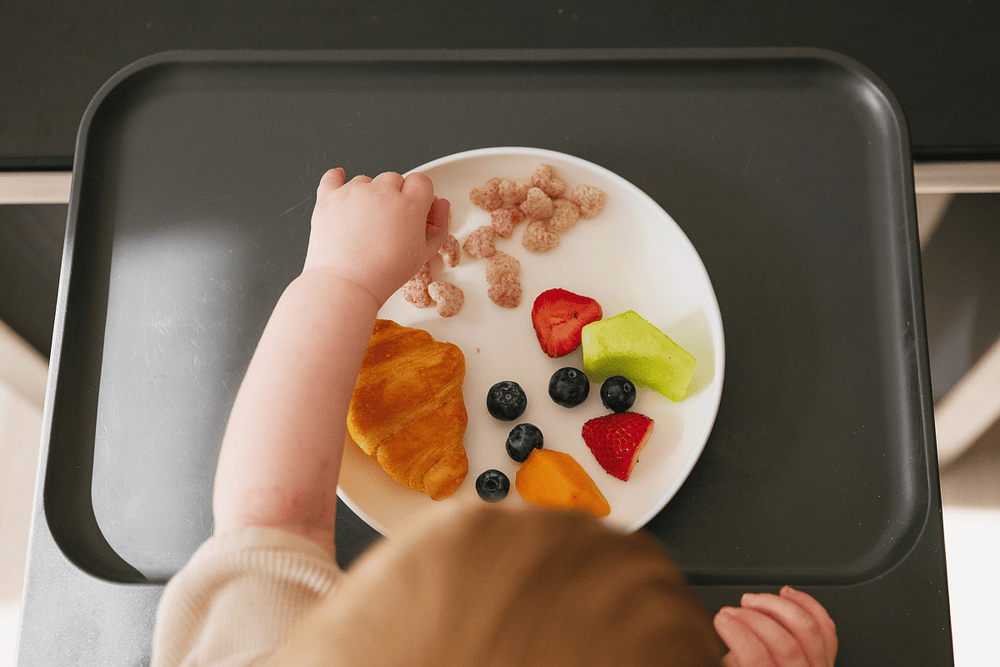
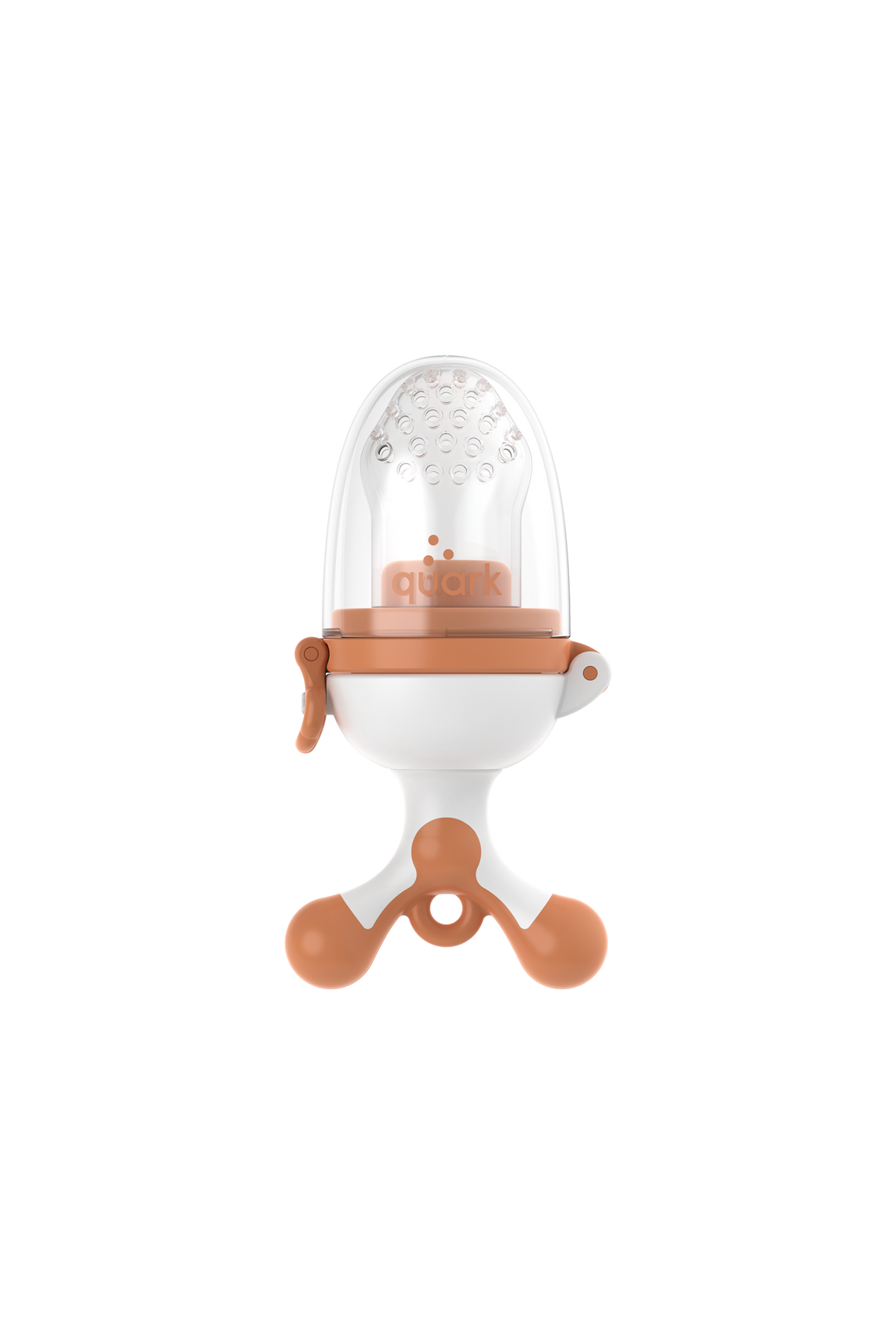
A fruit feeder should make first tastes calmer, not leave pulp in every corner of the kitchen. The trick is using it as a small, supervised routine: soft food, upright baby, twist-to-feed control, and a clean-apart design you actually wash right away.
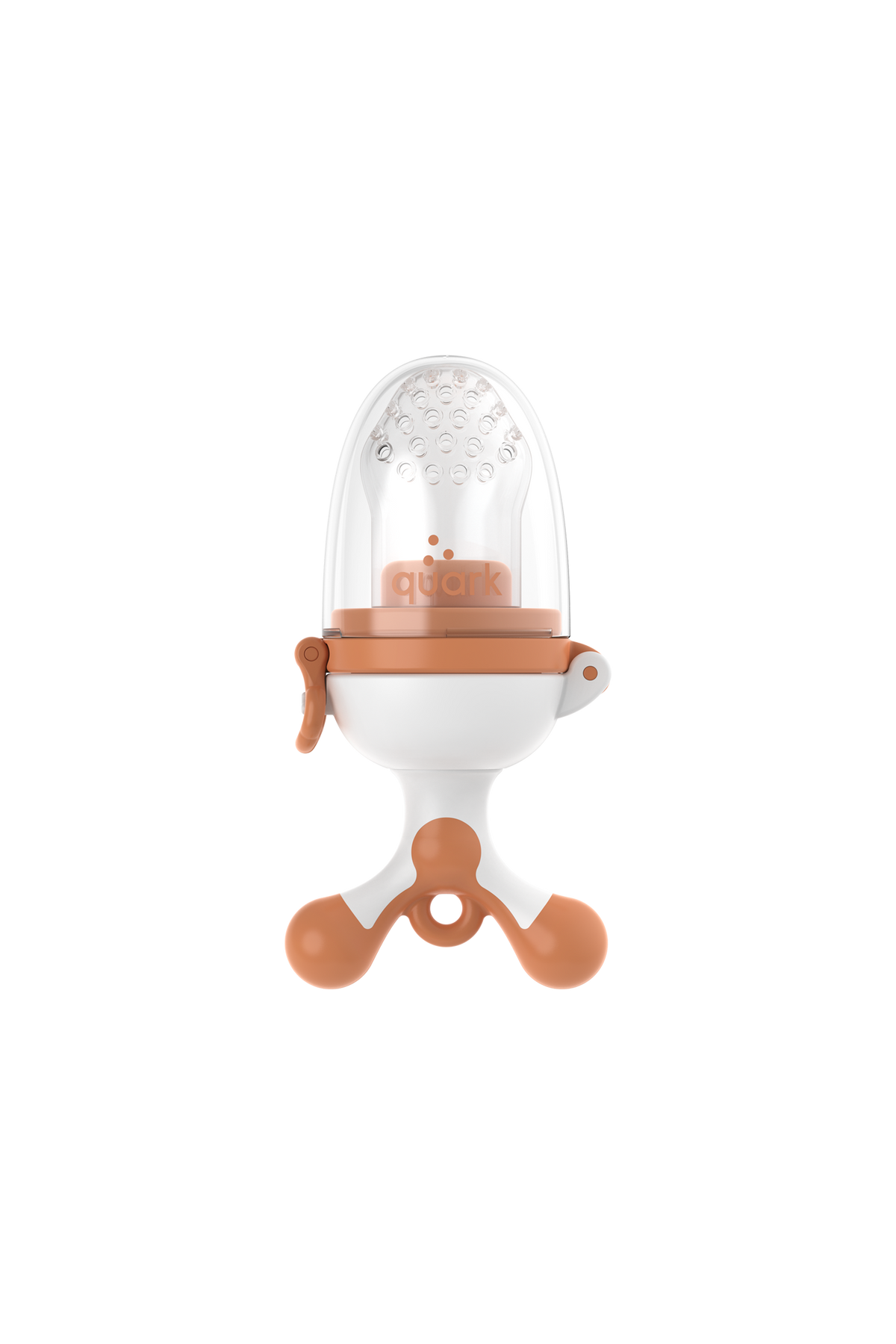
The first few weeks of solids are not neat. A baby learns by grabbing, gumming, dropping, smearing, and looking surprised when a new texture finally makes it through.
A baby fruit feeder can help, but only if it is used for the right job. It is not a shortcut around readiness. It is not a way to leave food with a baby while you do something else. It is a small tool for offering soft foods in a more controlled way while your baby sits upright and you stay close.
That is the practical lane for Fruuti: soft food goes into the silicone tip, the twist-to-feed base helps move food forward, and the whole feeder comes apart for cleaning. Used well, it gives parents a repeatable way to offer first tastes without turning every session into a sticky reset.
When is a baby ready for a fruit feeder?
Most babies are ready to start solids around 6 months, but age alone is not the test. The American Academy of Pediatrics says readiness depends on development: head control, sitting support, interest in food, and the ability to move food back to swallow. HealthyChildren.org gives the full readiness checklist.
Health Canada gives the same basic timing for older infants: at 6 months, babies still rely on breast milk or formula, but it is time to begin adding solid foods. Health Canada also emphasizes safe feeding habits as solids begin.
Readiness beats the calendar
If your baby cannot sit with support or hold their head steady, wait. A feeder is still a feeding tool. It does not make an unready baby ready for solids.
Start with short sessions
The first sessions can be 5 to 10 minutes. Think of them as taste and motor practice, not a meal. Stop before your baby gets tired, frustrated, or overly hungry.
Keep it supervised
Use Fruuti with your baby seated upright in a highchair or feeding seat. Stay close enough to see their face, hands, breathing, and pace.
What should go inside Fruuti?
Start with foods that are soft enough to mash with a fork. The feeder should not have to fight the food.
Good first options include ripe banana, ripe avocado, steamed pear, steamed apple, and soft-cooked sweet potato. If the food is firm, stringy, seedy, or difficult to mash, it is not the right first feeder choice.
The fork test
Press the food with the back of a fork. If it collapses easily, it is closer to feeder-ready. If it holds shape, breaks into hard pieces, or needs real chewing, skip it or cook it longer.
One change at a time
Offer one new food at a time before mixing flavors. That keeps the routine easier to read if your baby has a rash, stomach change, or strong dislike.
Cold foods need the same rules
Chilled soft fruit can be useful on teething days, but keep the texture baby-appropriate. Do not use Fruuti to offer hard frozen chunks.
How does Fruuti make the routine cleaner?
The messy part of a feeder is usually not the baby. It is the loading, the half-finished food, and the cleanup after pulp dries inside tiny places.
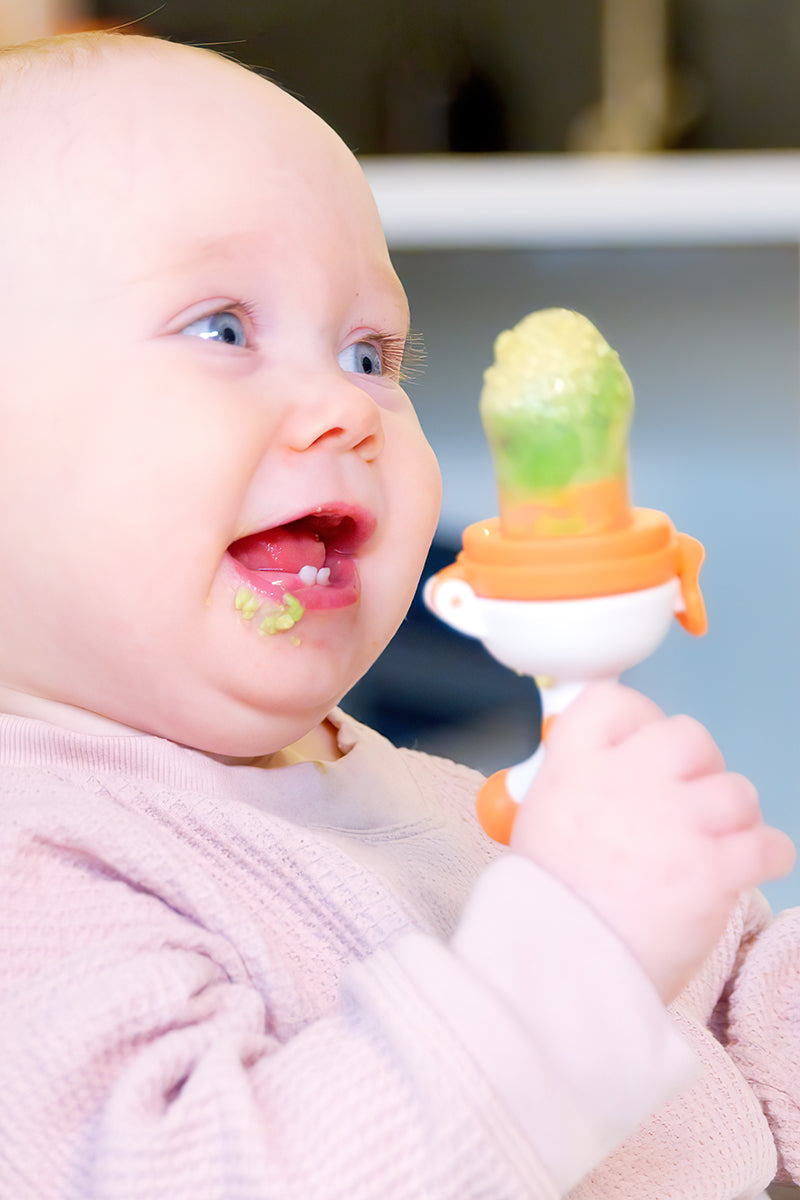
Fruuti is designed around a twist-to-feed base that helps move food forward through the silicone tip as baby eats. That matters because a traditional feeder can leave food trapped at the back while the baby keeps chewing the same empty spot.
The other practical detail is cleaning. The product page lists three extra-thick silicone tips, a fully removable design, dishwasher-safe components, and hand-washing with warm soapy water as care options. Those are the product features that make Fruuti easier to work into a daily routine.
Load less than you think
Overfilling makes the feeder harder to close, harder for baby to control, and messier to clean. Start small. You can reload if your baby is still interested.
Twist slowly
The twist base is there for control, not speed. Move food forward a little at a time so the tip stays active without flooding baby with too much texture.
Rinse before it dries
Fruit pulp gets harder to remove once it dries. Rinse the tip and parts right after feeding, then wash by hand or run through the dishwasher according to the care instructions.
What Fruuti is not for
The safest product copy is the honest copy: a fruit feeder supports supervised soft-food exploration. It does not make food risk-free.
Do not use any fruit feeder as a crib toy, stroller distraction, car-seat snack, or independent feeding tool. Do not put whole grapes, hard apple chunks, nuts, popcorn, thick globs of nut butter, or other choking-hazard foods inside it. The AAP specifically warns that babies should avoid foods that require chewing or can be choking hazards, including whole grapes, nuts, popcorn, chunks of peanut butter, raw vegetables, and hard or sticky candy.
Use it beside other feeding skills
Fruuti is a bridge, not the whole solids plan. Babies still need spoon practice, open texture progression, and age-appropriate finger foods when they are ready.
Inspect before each use
Check the silicone tip and parts before feeding. If a part is torn, cracked, stretched, or no longer seats correctly, stop using it and replace the part.
Keep medical claims out of it
Cold foods may feel soothing, and many parents use feeders during teething days, but teething pain, allergies, swallowing, and feeding readiness are health questions. For your own baby, follow your pediatrician or public-health guidance.
A simple Fruuti routine
Here is the version that is easy to repeat.
| Step | What to do | Why it matters |
|---|---|---|
| 1 | Confirm baby is upright and ready | A feeder does not replace developmental readiness |
| 2 | Choose one soft food | Easier to watch tolerance and texture |
| 3 | Mash or cut a small amount | Less pressure, less waste, easier cleanup |
| 4 | Load Fruuti lightly | Keeps flow controlled |
| 5 | Twist slowly as baby eats | Moves food forward without rushing |
| 6 | Stop when baby tires | Early solids are practice, not a volume target |
| 7 | Rinse and wash immediately | Prevents sticky residue from drying inside parts |
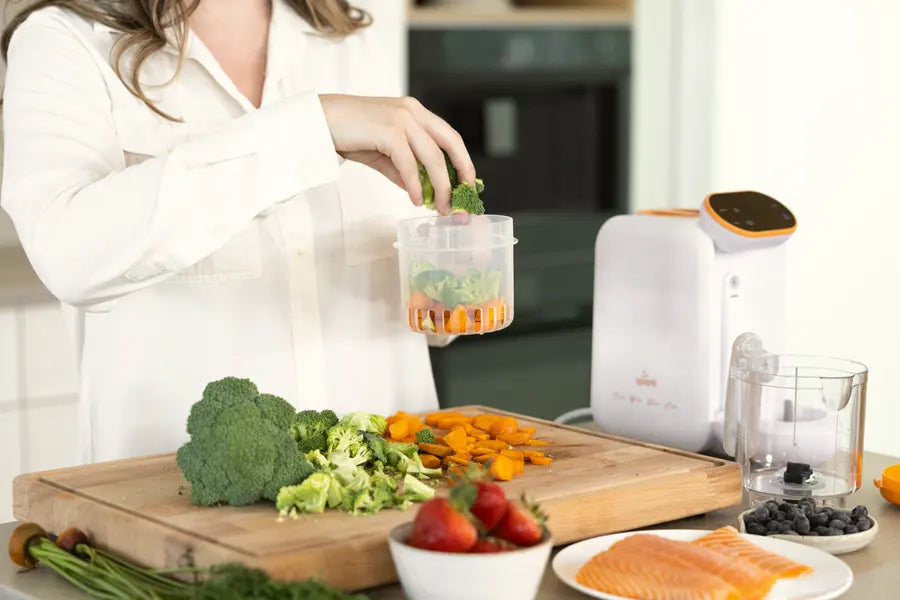
If you are already batch-prepping purees with Quook or freezing small portions in Chiill, Fruuti can become the "small taste" tool in the same mealtime system: prep soft food, offer a little, clean it before the next session.
Common questions
What age can a baby use Fruuti?
Usually around 6 months. Use readiness signs first: steady head control, sitting with support, interest in food, and the ability to move food back to swallow. Ask your pediatrician if your baby was premature or has feeding concerns.
Is Fruuti choke-proof?
No. No fruit feeder is choke-proof. Fruuti can help offer soft foods through a silicone tip, but food choice, baby posture, and active adult supervision still matter.
What foods should I put in Fruuti first?
Usually soft, simple foods. Ripe banana, ripe avocado, steamed pear, steamed apple, and soft-cooked sweet potato are practical starting points. Avoid hard, round, sticky, or stringy foods.
Can I use frozen fruit in Fruuti?
It depends. Use only age-appropriate textures and avoid hard frozen chunks. If you use chilled or frozen soft food for a teething day, keep baby upright and supervised the whole time.
How do I clean Fruuti after feeding?
Rinse it right away. Take the feeder apart, rinse before pulp dries, then wash by hand with warm soapy water or use the dishwasher according to the product care instructions.
Can Fruuti replace spoon feeding or finger foods?
No. Fruuti is one tool for supervised soft-food exploration. It should sit beside spoon practice, texture progression, and age-appropriate self-feeding as your baby is ready.
Sources
- Quark Baby: Fruuti Baby Fruit Feeder product page
- American Academy of Pediatrics / HealthyChildren.org: When Can Babies Start Solid Foods?
- Health Canada: Infant nutrition
This article is general product and feeding information, not medical advice. For questions about your baby's readiness, choking risk, allergies, swallowing, or feeding development, ask your pediatrician or qualified health professional.
Medically reviewed by Dr. Yang Last reviewed August 6, 2026.



Leave a comment
All comments are moderated before being published.
This site is protected by hCaptcha and the hCaptcha Privacy Policy and Terms of Service apply.