

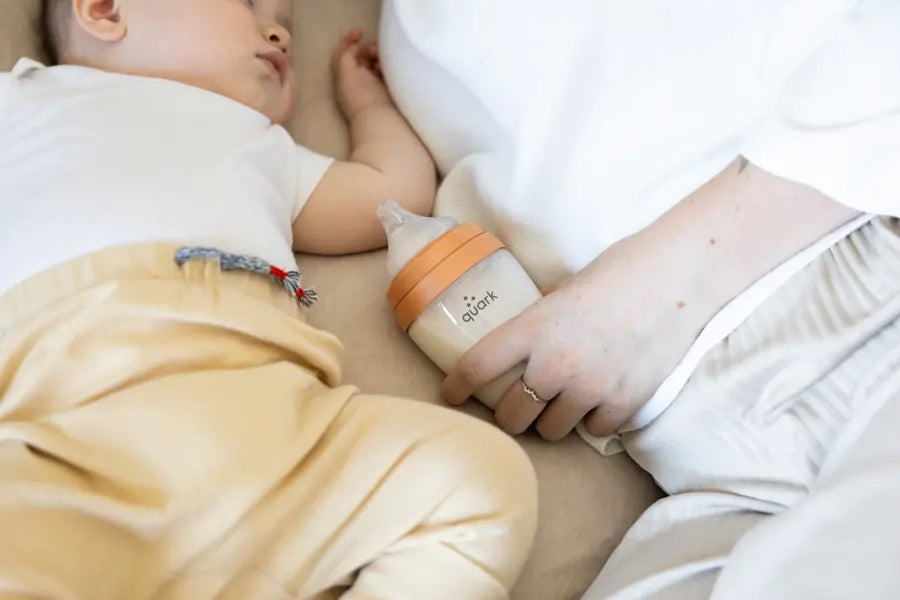
At 3 a.m., the feed itself is the easy part. What wrecks the night is everything around it: the walk to the kitchen, the lights, the bottle warmed by feel while the crying climbs. Move all of that to the crib and the night gets shorter.

Anyone a few weeks into night feeds knows the specific misery of the kitchen trip. The baby stirs, you're up, and now there's a cold bottle and a forty-foot walk between your half-asleep infant and the thing that settles them. By the time the bottle is warm, everyone is wide awake, and the feed that should have wrapped in twenty minutes turns into an hour.
Most of that friction comes down to a single mismatch: the warmer lives in the kitchen, and the baby doesn't. Close that gap and the feed stays in the quiet, dark register that lets everyone slide back down.
Why the kitchen trip works against sleep
The whole goal of a night feed is to keep things boring and dark so sleep stays close. The kitchen trip undoes that at every step: you flip on lights, you stand at the counter while a cold bottle slowly warms and the crying ramps up, and somewhere in there the baby fully wakes and so do you. The delay is short on paper and endless at 3 a.m. Keeping the warm-up where the feed actually happens, at the bedside or the changing table, removes the part that does the waking.
The cordless fix: the warm-up comes to the crib
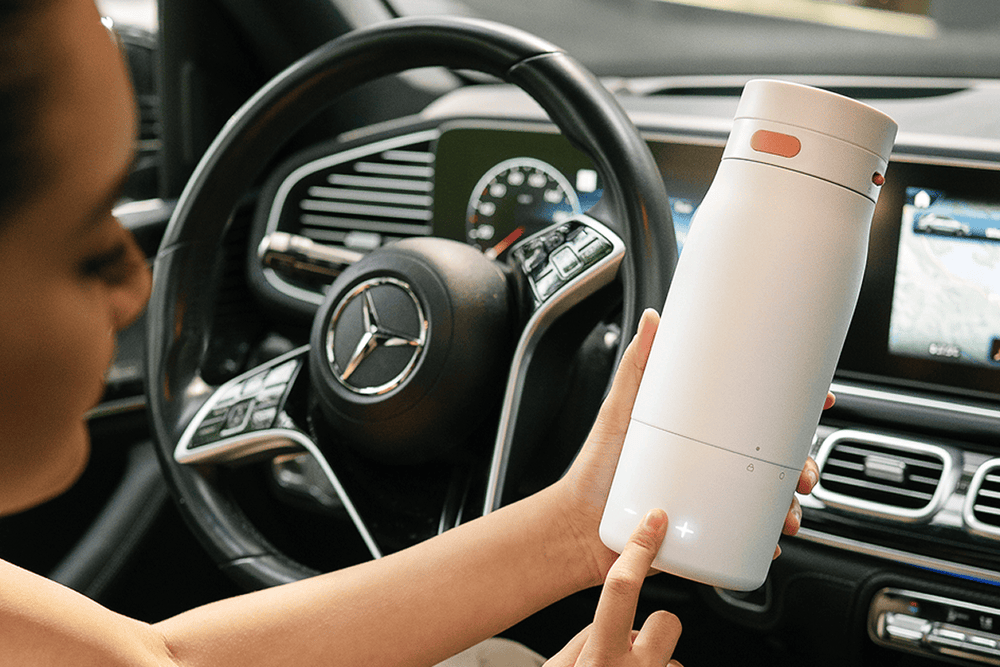
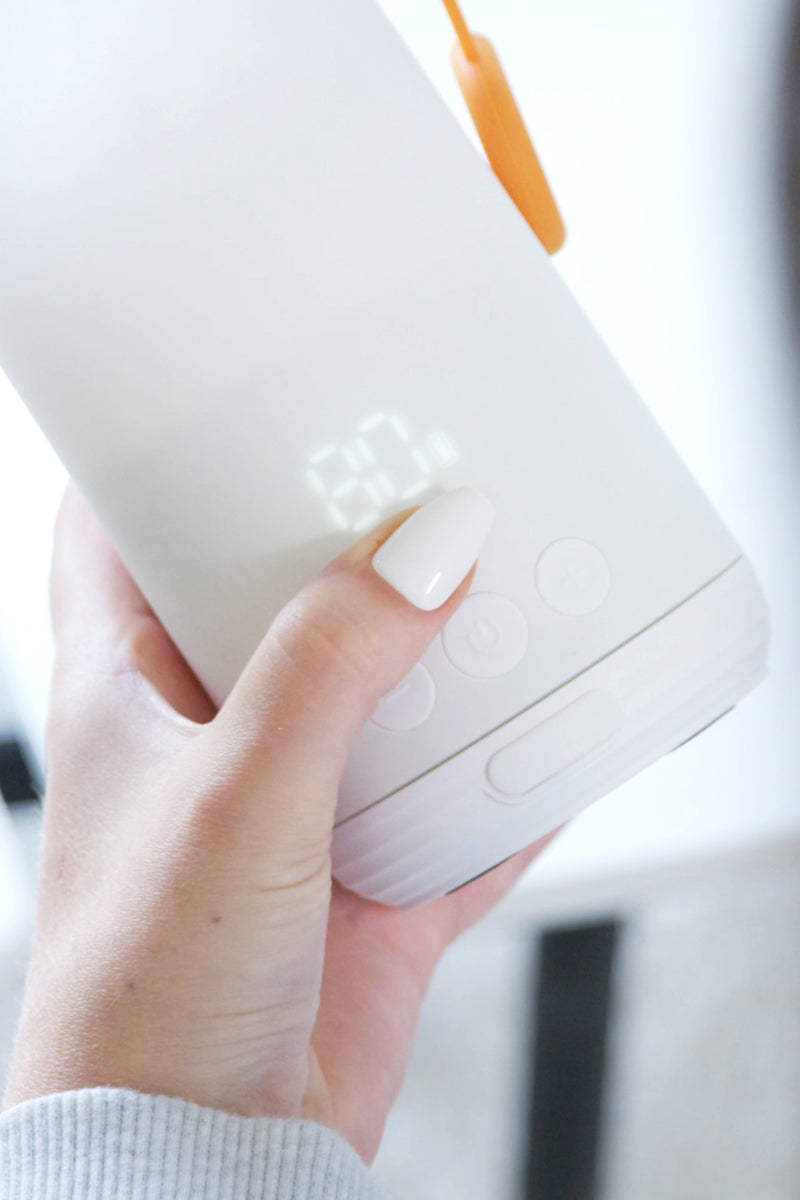
The reason a warmer usually lives in the kitchen is mundane: it needs an outlet. A battery-powered one doesn't, so it can sit on the changing table or a bedside shelf, charged and ready, with no cord to find in the dark and no outlet to crouch for. The BuubiBottle Smart Portable Milk Warmer runs on a built-in battery, up to 10 hours on a single USB-C charge (real life varies with use), which is what lets the warm-up come to the crib instead of the other way around.
A bedside feed station, set up at bedtime
You don't need much. The point is that one feed's worth of everything is within arm's reach before you go to sleep:
- the warmer, charged, on the changing table or a bedside shelf;
- a bottle prepped and stored safely nearby, following your usual routine;
- a dim light you can reach without standing, and a burp cloth.
Set it up at bedtime, and the 3 a.m. version of you reaches over instead of navigating the house.
Reading the temperature in the dark
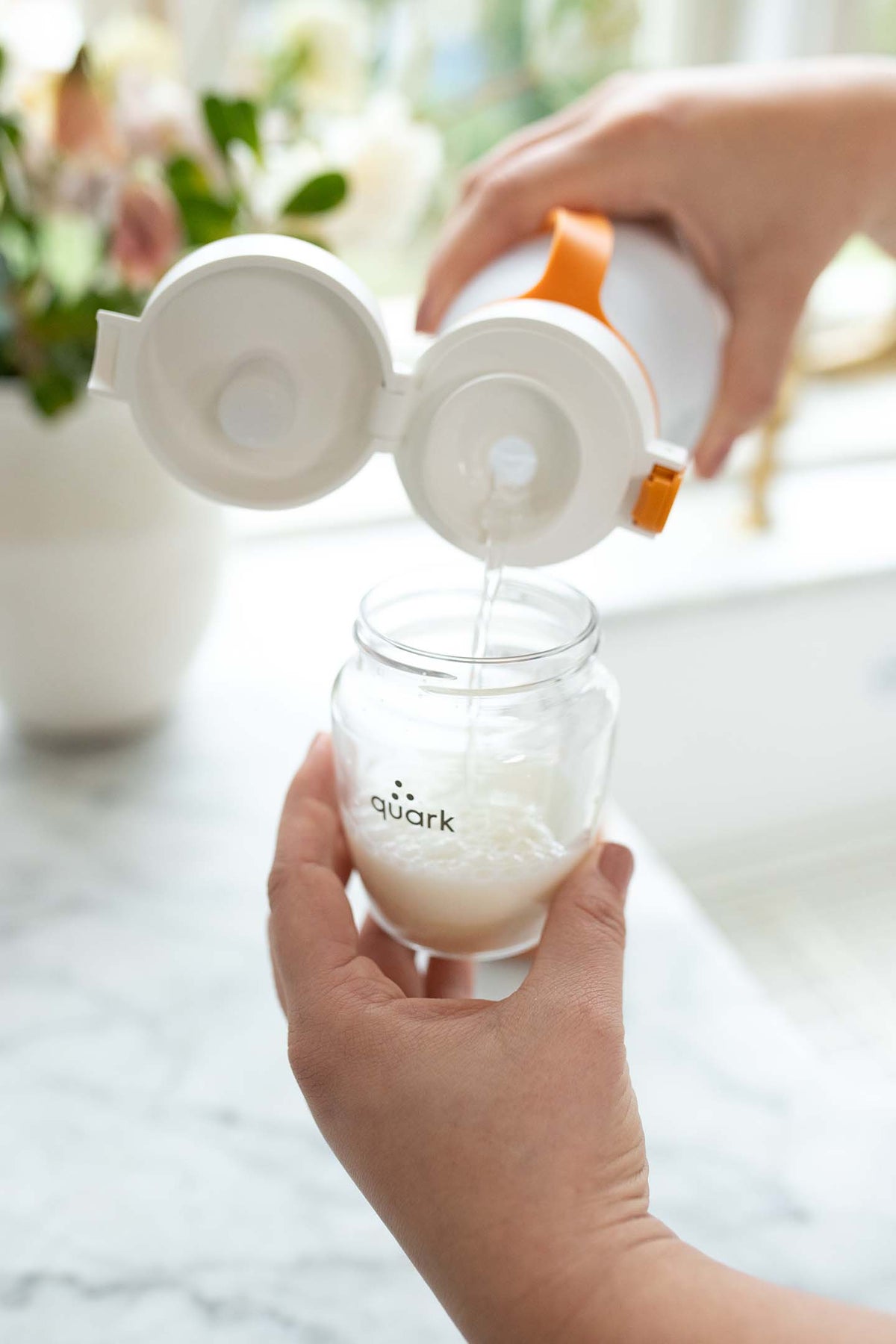
Here is the part that matters most at night, and it's where a controlled warmer beats a thermos of hot water or a bottle warmed by feel. Babies generally take a bottle best at body temperature, around 37 °C (98.6 °F). The warmer brings breast milk, formula, or water to that point and shows the number on a real-time display as it heats, within a controlled 37–50 °C (98–122 °F) range. At 3 a.m. that readout is the whole difference: you check a number instead of shaking drops onto your wrist in the dark and hoping. Less guessing means less fumbling, a calmer feed, and a better shot at everyone going back down. You still give the usual wrist test before the bottle reaches your baby.
The fix for the 3 a.m. feed usually isn't doing it faster. It's removing the walk, the lights, and the guesswork, so there's less to wake up from.
The safety basics, kept simple
A warm bottle within reach is a convenience, and the handling rules don't bend for it. Following CDC guidance on infant formula and CDC guidance on human milk: warm a properly stored bottle close to feed time, use it soon after, and don't store formula or breast milk in the device before or after warming. The warmer's job is to bring a safely prepared bottle up to temperature. It heats; it doesn't store milk, and it doesn't sterilize.
Common questions
Can I leave a bottle in the warmer overnight to grab later?
No. Don't store formula or breast milk in the device. Warm a properly stored bottle right before the feed and use it soon after, per CDC guidance.
How warm does it get the bottle?
To a precise 37 °C (98.6 °F, body temperature), and up to 50 °C (122 °F), with a real-time display so you read the temperature rather than guess it.
Does the warmer sterilize bottles too?
No. It heats milk or water to temperature; it doesn't sterilize. Clean and sterilize bottles separately, per your usual routine.
Will it work for breast milk as well as formula?
Yes. It warms breast milk, formula, or water evenly. Always follow safe handling for whatever you're warming.
Is it really cordless?
Yes. It runs on a built-in battery charged over USB-C, so it doesn't need to be plugged in during a feed, which is what lets it live by the crib.
Sources
- U.S. Centers for Disease Control and Prevention — Infant Formula Preparation & Storage
- U.S. Centers for Disease Control and Prevention — Breastfeeding / Human Milk Handling
General product information, not medical advice. For questions about your baby's feeding, talk to your pediatrician, and follow CDC guidance for preparing and storing infant formula and human milk. Written by the Quark editorial team.
Medically reviewed by Dr. Yang This article is general parenting guidance and is not a substitute for advice from your own pediatric provider. If your baby has symptoms that concern you, contact your provider.


Leave a comment
All comments are moderated before being published.
This site is protected by hCaptcha and the hCaptcha Privacy Policy and Terms of Service apply.